
Carnation bacterial wilt
Ralstonia syzygii
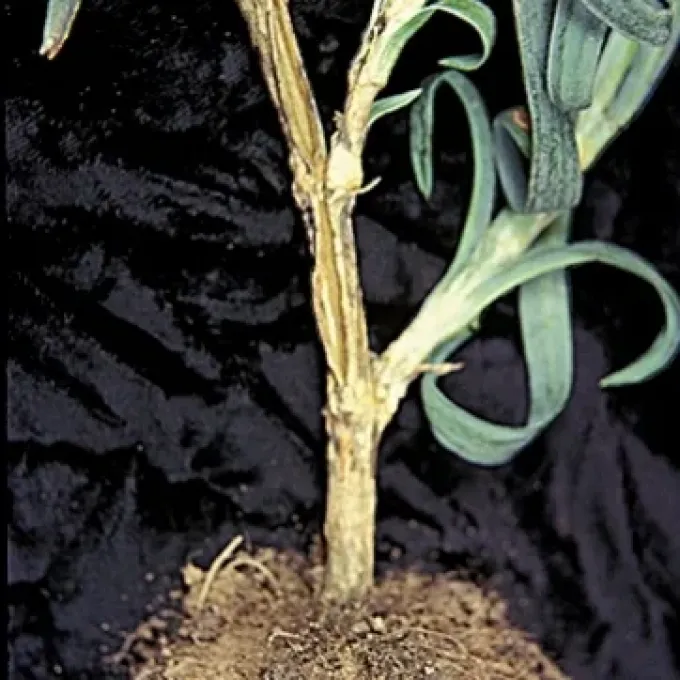
Description
Symptoms
The initial symptom of the disease is a slight yellowing and loss of turgor in the upper leaves, which becomes noticeable during the hottest part of the day.
As the pathogen advances through the vascular system, the lower leaves start to turn brown, and the stem near the crown becomes soft and discolored.
When the stem is cut crosswise, a distinct browning of the vascular ring is visible, and a milky bacterial ooze may emerge upon slight pressure.
In advanced cases, the plant wilts completely within a few days despite adequate soil moisture, as the bacteria block the plant's water-conducting vessels.
While the root system may appear healthy initially, it eventually undergoes rapid decay, which leads to the irreversible death of the plant.
Pathogen
The causative agent is the phytopathogenic bacterium Ralstonia syzygii, which belongs to a group of vascular wilts affecting various decorative crops.
The bacteria enter the plant through natural openings (stomata) or mechanical injuries caused during planting, weeding, or pruning operations.
The disease is characterized by systemic infection of the vascular tissues, where the bacteria multiply rapidly within the xylem, disrupting nutrient transport.
Reproduction occurs via cell division, leading to the accumulation of bacterial slime that physically obstructs the movement of water and nutrients.
The pathogen can survive in the soil, infected plant residues, and can also be spread through contaminated tools and irrigation water.
Conditions for development
High air and soil temperatures create the perfect environment for the rapid metabolic activity and spread of Ralstonia bacteria.
Excessive soil moisture or waterlogged conditions significantly accelerate the movement of the bacteria through the plant's vascular system.
The use of unsterilized tools during flower harvesting or pruning is a major transmission pathway for the pathogen between plants.
Dense planting and poor air circulation create a microclimate that promotes bacterial entry and rapid development of the disease in carnation crops.
Any injury to the root system during frequent transplanting or careless cultivation provides entry points for the bacteria to infect the plant.
Why it matters
The disease is highly destructive as it causes sudden plant death and can result in the loss of an entire crop within a very short period.
The severity is compounded by the lack of effective curative treatments for infected plants, necessitating immediate removal and destruction of all hotspots.
Soil where infected carnations were grown becomes a reservoir for the bacteria, making it unsuitable for susceptible crops for several years.
Economic damage includes high costs associated with replacing plant material and loss of production, as well as the need for long-term sanitation.
The disease is difficult to manage because symptoms often appear only after the bacteria have already colonized a significant portion of the plant.
Protection
The primary control strategy is prevention: using only certified, healthy plant material and sterilized growing media to ensure a clean start.
Strict phytosanitary protocols must be followed, including the prompt removal and burning of any plants showing symptoms of wilt, along with the root zone soil.
All cutting tools must be rigorously disinfected with appropriate chemical solutions after each contact with a plant to prevent cross-contamination.
Implementing a crop rotation scheme that avoids planting carnations or other susceptible species in infested areas for 3–5 years is essential.
- Maintaining optimal soil drainage and moisture levels.
- Pre-planting soil disinfection or solarization.
- Selecting resistant or tolerant carnation varieties.
- Ensuring adequate spacing to improve air ventilation.
Discussion
No discussions yet — be the first.