
Description
Symptoms
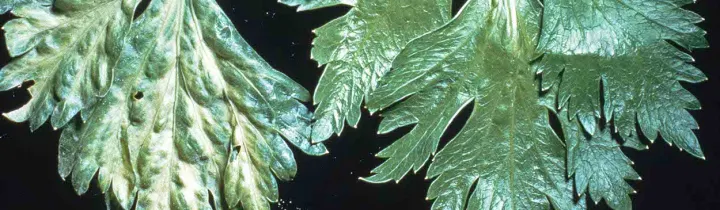
The primary symptom of Celery mosaic virus (CeMV) is the development of a distinct mosaic pattern on leaves, characterized by alternating light and dark green areas.
Leaves often exhibit severe deformation, crinkling, or curling, which significantly reduces the aesthetic and commercial value of the crop.
Affected plants show a clear reduction in overall growth rate and vigor, appearing stunted and poorly developed compared to healthy specimens.
Petiole development is often compromised, leading to shortened or abnormally thin stalks that fail to meet market standards for quality celery.
In mature plants, the systemic nature of the infection can lead to leaf yellowing and general decline, eventually resulting in reduced biomass production.
Pathogen
The disease is caused by the Celery mosaic virus (CeMV), which is a member of the Potyvirus genus within the family Potyviridae.
The virus consists of flexuous, filamentous particles and has a host range that is primarily restricted to plants in the Apiaceae (Umbelliferae) family.
The pathogen survives between growing seasons in perennial weed hosts that harbor the virus and act as a reservoir for infection in the spring.
Aphids are the primary biological vectors, transmitting the virus in a non-persistent, stylet-borne manner as they move between plants to feed.
Mechanical transmission is also a significant route, as the virus can easily spread via contaminated tools, equipment, or handling during routine field operations.
Conditions for development
Favorable conditions for virus spread include warm temperatures that boost aphid populations and accelerate their migration and feeding activities.
The proximity of commercial celery fields to uncultivated areas rich in wild umbelliferous weeds provides a continuous source of primary inoculum.
Poor agricultural practices, such as neglecting weed management or failing to control aphid outbreaks early, dramatically increase infection rates.
Water stress and nutrient deficiencies can weaken celery plants, making them more susceptible to systemic colonization by the viral pathogen.
High plant density and late-season plantings can also create microclimates that encourage both the insect vectors and the rapid spread of the virus.
Why it matters
Celery mosaic virus causes severe yield losses, often ranging from 20% to over 50%, depending on the timing of the initial infection in the field.
Infected celery crops lose their marketability due to leaf distortion and poor appearance, leading to significant financial losses for commercial producers.
The quality of the produce is negatively impacted, with decreased flavor and poor shelf life, making the crop unsuitable for long-distance transport.
Because systemic viral diseases cannot be treated with curative chemical fungicides or bactericides, infected fields often face total harvest failure.
Beyond direct yield loss, growers incur substantial costs for additional insecticidal applications and the labor required to rogue out infected plants.
Protection
The most effective strategy involves intensive aphid management using regular scouting and targeted insecticide applications to disrupt viral transmission.
Strict sanitation measures, including the complete removal of wild Apiaceae weeds from field margins, are essential to eliminate virus reservoirs.
Growers should prioritize the use of high-quality, virus-free transplants and avoid planting new celery crops adjacent to older, potentially infected fields.
Disinfecting all harvesting tools and agricultural equipment between fields helps prevent the mechanical transfer of virus particles by human activity.
Implementing proper crop rotation and allowing sufficient fallow periods can help break the lifecycle of the virus and reduce its prevalence in the soil environment.
In brief
1
Affects crops
Biology
Pathogens and affected parts
Pathogens
Affected plant parts
whole plant
Content graph
Affects crops · 1
Content graph
Connections · Celery mosaic virus
Most often together:
Marketplace
Products · 3


Community
Discussion
No discussions yet — be the first.