

Description
Symptoms
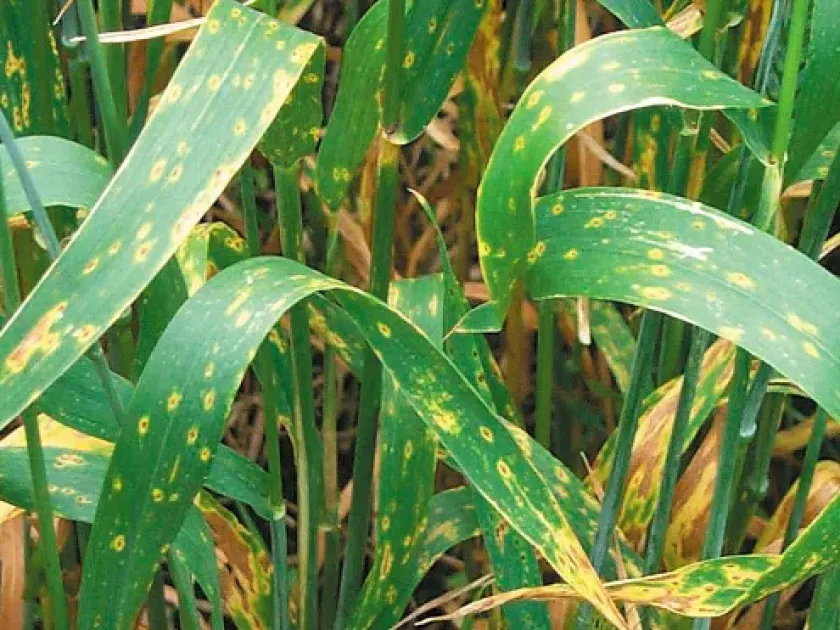
Symptoms typically begin as small, water-soaked spots on the leaves. As the infection progresses, these spots expand into lens-shaped or irregular necrotic lesions, often surrounded by a characteristic yellow or chlorotic halo.
A key diagnostic feature is the presence of small, dark brown or black pycnidia scattered within the necrotic tissue. These are visible with a hand lens and serve as clear confirmation of a Stagonospora infection.
When the infection spreads to the stems, it manifests as dark brown lesions that can weaken the stalk, leading to premature lodging. This physiological stress reduces the plant's ability to transport water and nutrients to the developing grain.
In cases of severe head blight, the glumes and spikelets show irregular grey-brown lesions. This can lead to kernel shriveling and poor grain fill, which drastically reduces the final yield and quality of the harvest.
For ornamental crops like Amaryllis, the disease (often called red blotch) presents as reddish spots or streaks on the leaves and flower stalks, which can lead to bulb rot if not managed appropriately.
Pathogen
The disease is caused by fungi of the genus Stagonospora, which are members of the ascomycete group. A significant pathogen in this genus is Stagonospora nodorum, widely known for causing septoria nodorum blotch (SNB) in cereals, impacting wheat and barley globally.
This pathogen is primarily a foliar specialist that causes necrotrophic lesions. It relies on its ability to saprophytically survive on crop debris, making it a persistent threat in regions with intensive agricultural practices.
The life cycle involves the production of pycnidia, which are asexual fruiting bodies. Under suitable conditions, these structures release pycnidiospores that are splashed onto healthy plant tissues by rainfall, leading to rapid secondary infection cycles.
In addition to asexual reproduction, some species within the Stagonospora complex may produce ascospores in perithecia on overwintered debris. These spores can be wind-dispersed over long distances, initiating primary infections in the spring.
Genetic diversity within Stagonospora populations is high. This evolutionary potential enables the fungus to overcome host resistance and develop reduced sensitivity to various fungicide classes, necessitating a multifaceted approach to management.
Conditions for development
The development of Stagonospora is heavily dependent on moisture. Prolonged periods of high relative humidity, combined with frequent rainfall, create the perfect environment for spore germination and lesion expansion.
The optimal temperature range for the pathogen's growth is between 15°C and 25°C. In these conditions, the incubation period is shortened, allowing the fungus to complete multiple cycles of infection within a single growing season.
High plant density and lush canopy growth contribute to a microclimate that traps moisture and limits airflow. This provides a protected environment for the pathogen to thrive, even when external conditions might seem less conducive.
Nitrogen-rich fertilization, while beneficial for growth, can increase susceptibility by promoting rapid, tender tissue development. These tissues are structurally weaker and more easily penetrated by the fungal hyphae.
The presence of previous season's crop residue on the soil surface is the primary source of initial inoculum. Conservation tillage systems, while beneficial for soil health, may require additional management to mitigate the risk of pathogen carryover.
Why it matters
The primary economic harm caused by Stagonospora is the reduction in photosynthetic leaf area. When the flag leaf is affected, the resulting loss in grain filling capacity leads to significant yield deficits, sometimes exceeding 40%.
Reduced grain quality is a major issue for cereal producers. Infected grain may exhibit lower test weights, poor milling quality, and decreased germination rates, which are critical factors for both food processing and seed certification.
Stalk infection leads to structural failure and lodging. Lodged crops are not only harder to harvest but are also more likely to suffer from further fungal colonization and mycotoxin contamination, impacting storage longevity.
In horticultural settings, the disease causes unsightly blemishes that reduce the marketability of ornamental plants. Severe cases can lead to systemic plant death and total loss of nursery inventory.
The disease also imposes stress on the plants, making them more vulnerable to secondary invaders. This combined pressure complicates crop management and increases the overall cost of chemical interventions required to stabilize yields.
Protection
Effective management begins with cultural practices. Crop rotation is essential to break the infection cycle. Avoiding susceptible crops for at least two years on the same field helps to naturally decline the soil inoculum load.
Residue management, such as burying crop debris through deep plowing, helps to eliminate the primary survival niches for the fungus. This physical disruption is highly effective in reducing the early-season infection pressure.
Genetic resistance is the most sustainable approach. Growers should prioritize the use of resistant or tolerant cultivars as documented in local variety trials, which can significantly mitigate the risk of severe disease outbreaks.
Fungicide application should be based on scouting and economic thresholds. Combining different modes of action (such as SDHIs and triazoles) helps prevent the selection of fungicide-resistant strains and ensures broad-spectrum protection.
- Apply seed treatments to prevent early seedling blight.
- Use balanced fertility programs to promote robust plant health.
- Practice timely weeding to eliminate alternative host plants.
- Monitor weather patterns to predict risk periods for infection.
Content graph
Connections · Stagonospora leaf spot
Most often together:
Marketplace
Products · 9


Community
Discussion
No discussions yet — be the first.