

Sclerotinia rot
Sclerotinia rot
Description
Symptoms
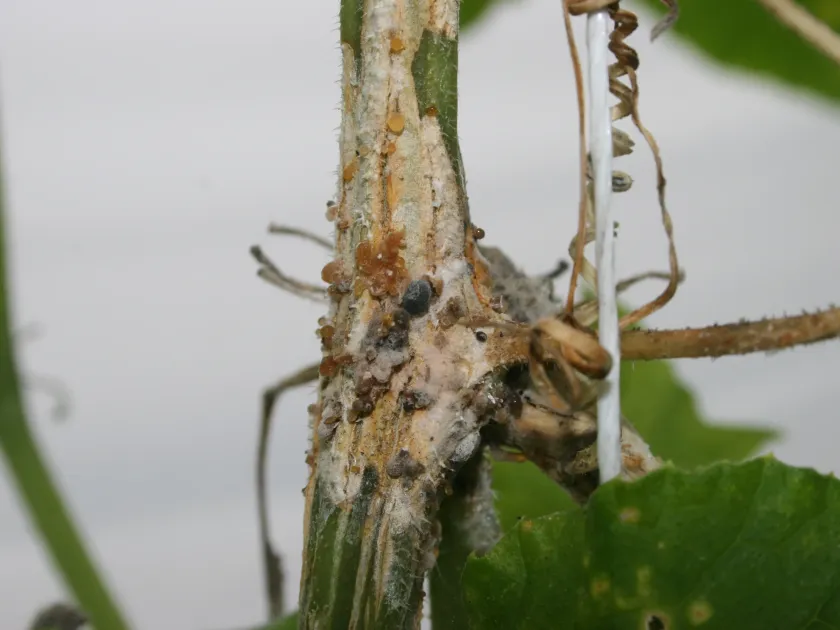
The characteristic symptom is the development of a fluffy, white cottony mycelial growth on infected stems, leaves, or fruits, often accompanied by soft, water-soaked tissue decay.
As the disease progresses, the plant tissue collapses, turns brown, and eventually decays entirely, leading to sudden wilting and plant death.
A diagnostic sign is the formation of large, black, hardened sclerotia inside or on the surface of the rotted tissue, resembling rodent droppings.
In crops like onions and garlic, the fungus invades the basal plate, causing watery rot that spreads upwards through the scales and destroys the bulb integrity.
For fruit crops like mango and passion fruit, the disease manifests as rapid fruit rotting, rendering the produce unmarketable and causing significant post-harvest losses.
Pathogen
The disease is caused by the soil-borne fungal pathogen Sclerotinia sclerotiorum, which is notorious for its extremely wide host range, including over 400 plant species.
The fungus produces hard, black resting structures called sclerotia, which allow the pathogen to survive in the soil for several years even in the absence of a host.
The pathogen propagates through both mycelial spread in the soil and the production of airborne spores, which makes it highly mobile and difficult to contain.
It impacts a diverse variety of crops such as bulb onions, garlic, sweet potatoes, passion fruit, and tropical mangoes, attacking various parts of the plant.
The survival strategy of the fungus, relying on sclerotia, makes it a persistent challenge for both intensive farming and greenhouse production systems.
Conditions for development
Sclerotinia rot thrives in cool to moderate temperatures (typically 15-22°C) combined with prolonged high humidity and moisture availability.
Dense planting patterns that restrict airflow and increase relative humidity in the canopy create an ideal microclimate for fungal proliferation.
Frequent rainfall or overhead irrigation that leaves water on the foliage for extended periods significantly promotes the germination of fungal spores.
Poorly drained soils or waterlogged conditions are major drivers for the rapid development of root and basal rot caused by this pathogen.
The presence of decomposing organic matter or crop residues from previous seasons provides the necessary nutrition for the pathogen to establish primary infections.
Why it matters
The primary damage caused by Sclerotinia rot is the massive reduction in yield, often manifesting as total plant collapse in the field or rapid decay during transport.
Because the fungus destroys the vascular system of the plant, it prevents water and nutrient transport, leading to irreversible wilting in a matter of days.
Post-harvest losses are catastrophic as infected tubers, bulbs, or fruits act as sources of inoculum, rapidly spreading the mold to healthy produce in storage.
Long-term contamination of fields with sclerotia limits the choice of future crops, as many broad-leaf vegetables are highly susceptible to the disease.
The disease causes significant economic strain on farmers due to the need for costly fungicides and the high probability of crop rejection by wholesalers.
Protection
A robust crop rotation strategy, alternating susceptible broad-leaf crops with non-host species like grasses or cereals, is critical for disease management.
Sanitation practices, including the removal and deep burial of infected plant debris, are essential to reduce the baseline inoculum level in the soil.
Improving field drainage and ensuring adequate plant spacing are key cultural practices to lower humidity levels and discourage fungal activity.
Biological control methods utilizing Trichoderma species have shown success in suppressing pathogen activity in the soil environment.
When the infection pressure is high, the application of targeted, labeled fungicides during the critical flowering or canopy closure stages is recommended to protect the crop.
In brief
5
Affects crops
Biology
Pathogens and affected parts
Affected plant parts
whole plant
Content graph
Affects crops · 5
Content graph
Connections · Sclerotinia rot
Most often together:
Marketplace
Products · 6

Community
Discussion
No discussions yet — be the first.