

Description
Symptoms
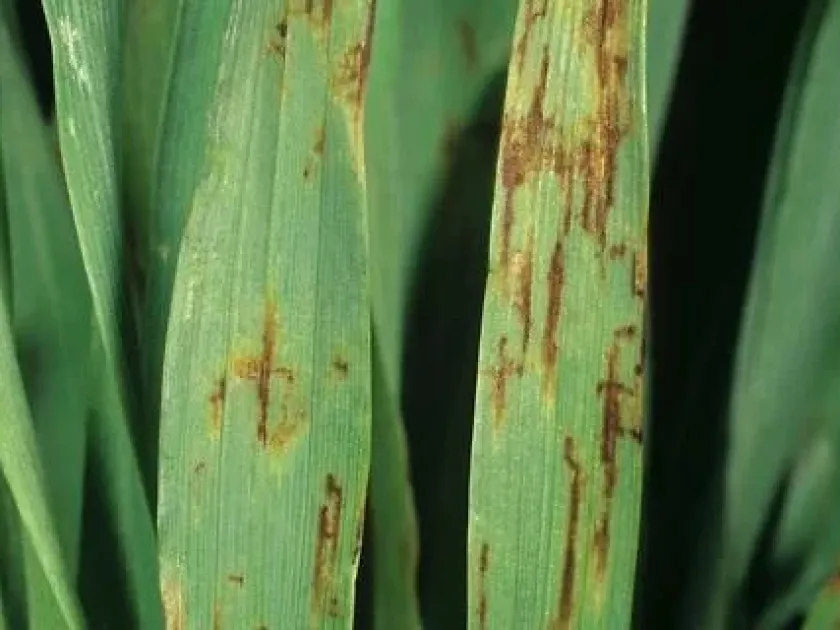
The disease is characterized by the appearance of small, dark brown lesions on the leaves, which expand to form a distinct net-like pattern.
These net-like blotches consist of dark brown longitudinal and transverse stripes, often surrounded by a chlorotic yellow halo.
As the infection progresses, the lesions enlarge and merge, leading to extensive tissue necrosis and eventual leaf death.
Under humid conditions, an olive-brown mass of spores may become visible on the surface of the lesions.
Severe infestations can affect the entire plant, including the leaf sheaths and the head, resulting in shriveled grains.
Pathogen
The causative agent of net blotch is the fungus Drechslera teres, which has a teleomorph stage known as Pyrenophora teres.
The pathogen survives between seasons primarily on infected crop residue and stubble left in the field from the previous harvest.
Seeds can also act as carriers of the pathogen, allowing the disease to be introduced into new fields through infected planting material.
The fungus produces conidia that are easily dispersed by wind and rain splash, enabling rapid spread across the field during the growing season.
Genetic diversity within the Drechslera teres population means that various races of the pathogen may show different levels of aggressiveness.
Conditions for development
Net blotch development is favored by mild, wet weather conditions with temperatures ranging from 15°C to 22°C.
Frequent rainfall and prolonged leaf wetness are essential for the germination of conidia and the successful colonization of the host plant.
Dense crop stands create a humid microclimate that significantly accelerates the spread and severity of the disease.
Early-sown winter barley is at a higher risk of early infection if local inoculum levels are high due to previous stubble.
Low soil fertility or imbalanced nutrient applications can weaken plant resistance, making them more susceptible to fungal attack.
Why it matters
The primary impact of net blotch is the significant reduction in photosynthetic leaf area, leading to decreased plant vigor.
Severe infection results in grain filling issues, reduced grain weight, and lower overall quality of the harvest.
Barley intended for malting is particularly sensitive, as infected grains may fail to meet quality standards for germination.
The reduction in root development and overall plant stress makes infected crops more vulnerable to secondary pathogens and drought.
Yield losses due to net blotch can vary significantly, often reaching 20-40% in highly susceptible varieties and favorable weather conditions.
Protection
Crop rotation is the most effective management strategy; a minimum of two years between barley crops is recommended to reduce inoculum.
Tilling and incorporating crop residue into the soil helps accelerate decomposition and destroys the fungus's overwintering sites.
The use of high-quality, fungicide-treated seeds is crucial for preventing early-season infections.
- Growing disease-resistant cultivars is the best long-term control option.
- Applying foliar fungicides when thresholds are met during stem elongation.
- Maintaining optimal seeding rates to improve air circulation in the field.
Regular field scouting for early symptoms is essential for making timely decisions regarding the application of systemic fungicides.
In brief
1
Affects crops
Biology
Pathogens and affected parts
Affected plant parts
whole plant
Content graph
Affects crops · 1
Content graph
Connections · Net blotch
Most often together:
Marketplace
Products · 1
Community
Discussion
No discussions yet — be the first.