

Disease · fungal · affects Rye, Winter barley, Winter wheat
Especially harmful
Stem rust
Puccinia graminis
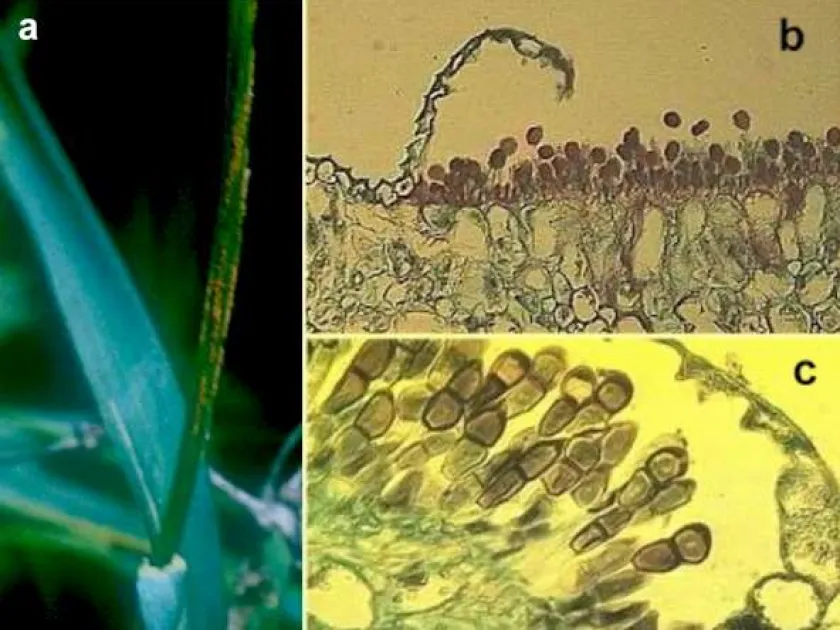
Description
Symptoms
The most visible symptoms are elongated, rust-red or brick-colored pustules (uredinia) that rupture the epidermal layer of the stem and leaf sheaths.
These pustules are often found in clusters or rows, giving the stem a rough and textured appearance as the infection progresses throughout the season.
A distinctive feature of stem rust compared to other rust types is the presence of jagged, torn epidermal tissue surrounding the pustules.
As the plant nears maturity, the pustules turn black, indicating the formation of teliospores, which are the resting stage of the pathogen.
Severe infestations cause the stems to become brittle, leading to lodging, where the plant falls over and becomes difficult or impossible to harvest.
Pathogen
Stem rust is caused by the fungus Puccinia graminis, a highly destructive obligate pathogen belonging to the Pucciniaceae family. This pathogen is known for its complex life cycle, which may involve an alternate host such as the barberry bush.
It is classified as a rust disease primarily affecting the stems and leaf sheaths of wheat, barley, and rye. The fungus extracts nutrients directly from the host plant's cells, severely weakening it.
The pathogen spreads through urediniospores, which are carried by wind currents over hundreds of kilometers, making it a globally significant threat to food security.
Specialized forms (formae speciales) exist, meaning specific strains are often host-specific to wheat, barley, or rye, requiring tailored management approaches.
The fungal mycelium grows within the host tissue, eventually bursting through the epidermis to release thousands of spores into the environment.
Conditions for development
Optimal conditions for stem rust development include warm temperatures, typically between 18°C and 25°C, combined with high humidity or rainfall.
The presence of free moisture (dew or rain) on the plant surface is essential for the germination of fungal spores and the subsequent infection process.
Dense crop canopies that limit airflow and maintain higher local humidity levels significantly accelerate the spread of the disease within the field.
Weather patterns involving warm days and cool, damp nights are particularly conducive to the rapid establishment of the disease in winter cereal crops.
The proximity of infected alternative hosts or susceptible volunteer cereals provides an early source of inoculum that can trigger an epidemic.
Why it matters
Stem rust is extremely damaging because it directly competes with the developing grains for nutrients and water, often leading to shriveled or empty kernels.
By disrupting the plant's vascular system, the fungus limits the transport of sugars to the grain, causing significant reductions in yield and test weight.
The damage to the stem structure increases the risk of lodging, which not only lowers grain quality but also complicates the mechanical harvesting process.
In highly susceptible varieties, under favorable conditions, the disease can cause yield losses of up to 70% or more, resulting in severe economic impacts.
Grain harvested from heavily rusted fields often exhibits poor milling and baking quality, making it less marketable for industrial use.
Protection
The primary and most sustainable defense against stem rust is the deployment of resistant or tolerant crop varieties through traditional breeding and genetics.
Integrated pest management requires monitoring for early infection signs and applying systemic fungicides if thresholds are met during critical growth stages.
Good agricultural practices, such as removing volunteer cereals and controlling alternate hosts like barberry, are vital to reducing initial inoculum levels.
Balanced crop nutrition and avoiding excessive nitrogen application can help keep the crop resilient and less attractive to rapid fungal colonization.
- Use of certified, high-quality seed;
- Strategic use of fungicides (e.g., triazoles or strobilurins);
- Crop rotation to break the disease cycle;
- Field scouting to detect early outbreaks.
In brief
3
Affects crops
Biology
Pathogens and affected parts
Pathogens
Puccinia graminis· fungus
Puccinia graminis· fungus
Puccinia albigensis· fungus
Puccinia anthistiriae· fungus
Puccinia brizae-maximae· fungus
Puccinia cerealis· fungus
Puccinia elymina· fungus
Puccinia favargeri· fungus
Puccinia jubata· fungus
Puccinia linearis· fungus
Puccinia megalopotamica· fungus
Puccinia vilis· fungus
Affected plant parts
stem
Content graph
Affects crops · 3
Content graph
Connections · Stem rust
Most often together:
Nutrient elements
1 contact
Marketplace
Products · 1
Community
Discussion
No discussions yet — be the first.