

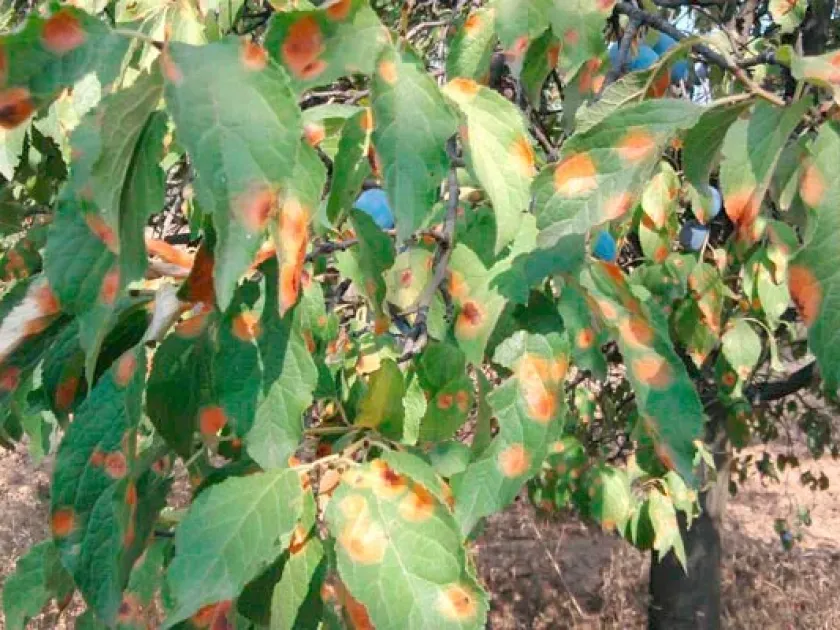
Description
Symptoms
Early symptoms appear as small, pale yellow or light green spots on the upper side of the leaves as the season begins.
As the fungal stroma matures and increases in size, these spots turn into characteristic bright red, orange, or reddish-brown patches.
The infected areas of the leaf blade become thickened and fleshy compared to the surrounding healthy tissue, creating a distinct bumpy texture.
Small black dots, which represent the fruiting structures of the fungus, gradually emerge on the surface of the lesions as summer progresses.
Severely affected leaves exhibit curling, loss of flexibility, and eventually become necrotic, leading to premature defoliation of the tree.
Pathogen
The disease is caused by the ascomycete fungus Polystigma rubrum, which is a specialized parasite that targets stone fruit trees, particularly plums and blackthorns.
The fungus maintains its lifecycle by overwintering in fallen, infected leaves, where it develops specialized fruiting bodies known as apothecia.
During spring, in alignment with the tree's budding and flowering period, the fungus releases ascospores that are dispersed by wind and splashing raindrops onto new foliage.
Upon landing on a suitable leaf surface, the spores germinate and penetrate the leaf tissue, leading to the formation of a dense mycelial mat called a stroma.
The infection process is highly synchronized with the host plant's phenology, making early spring the most critical window for disease management.
Conditions for development
High relative humidity and consistent rainfall during the early spring months are the primary environmental drivers for the development of Polystigma.
Moderate temperatures ranging from 15°C to 20°C provide the optimal conditions for spore germination and rapid colonization of the host tissue.
Dense, overgrown tree canopies that restrict air movement prevent leaves from drying quickly after rain, favoring fungal growth.
Poor orchard sanitation, particularly the presence of leaf litter left under the trees, provides an abundant source of inoculum for the following year.
Regions with frequent spring mists and persistent dampness are particularly prone to severe outbreaks of red spot disease.
Why it matters
The most significant impact of the disease is the reduction of the leaf surface area available for photosynthesis due to early leaf drop.
Deprived of sufficient energy production, trees show reduced vigor, poor fruit development, and a significant decline in overall yield.
Fruit quality is often compromised, as affected trees may produce smaller, less flavorful fruits that tend to drop prematurely.
Chronic annual infection weakens the overall structure and health of the tree, rendering it more susceptible to winter frost damage.
Young trees are especially vulnerable, as the disease can severely stunt their growth and delay the onset of productive fruiting years.
Protection
The cornerstone of control is strict orchard hygiene, specifically the collection and burning or deep burial of all fallen leaves during autumn.
Regular pruning is essential to improve canopy airflow, which helps foliage dry faster and reduces the duration of leaf wetness.
Applying copper-based fungicides during the dormant season and immediately after the flowering period acts as a preventive barrier against spore infection.
Systemic fungicides may be employed in orchards with high infection pressure, provided that safety guidelines and pre-harvest intervals are strictly followed.
Integrated pest management strategies should focus on monitoring weather conditions to time applications of protective sprays effectively.
Content graph
Connections · Polystigma
Most often together:
Marketplace
Products · 1
Community
Discussion
No discussions yet — be the first.