

Description
Symptoms
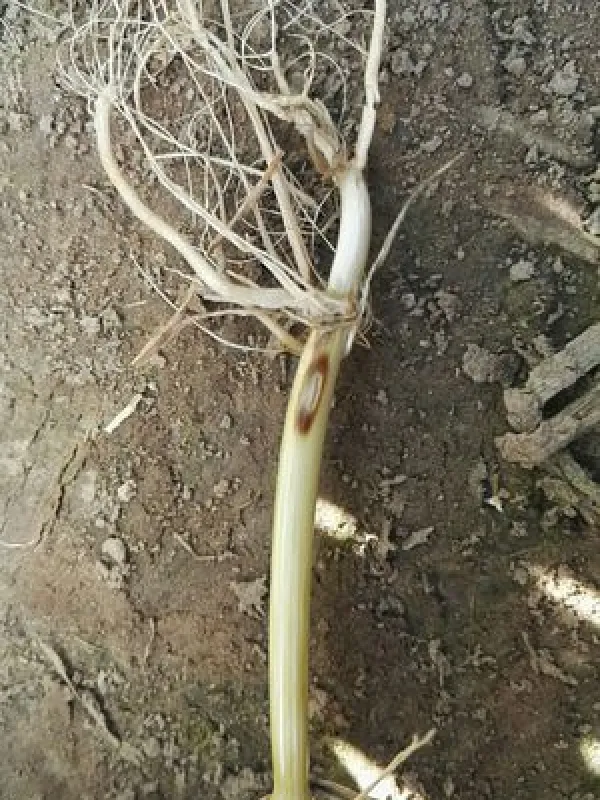
The hallmark symptom is the formation of lens-shaped or eye-shaped lesions on the stem bases, which feature a light center and a dark border.
These spots are initially observed on the lower leaf sheaths and eventually penetrate through the stem walls toward the center.
A distinctive sign of an advanced infection is the presence of gray mycelium within the stem cavity of the affected plants.
The structural weakness caused by the fungal lesions often leads to lodging, where stems collapse or snap at the base during windy conditions.
In mature crops, the disease results in premature ripening, stunted growth, and the development of white, sterile, or shriveled heads.
Pathogen
The causative agent of Eyespot is the fungus Oculimacula yallundae (formerly Pseudocercosporella herpotrichoides).
This pathogen specifically attacks the base of the stems of cereal crops, leading to severe damage in the vascular system of the plant.
The fungus survives on infected crop residues in the soil for several seasons, serving as the primary source of infection for new crops.
It produces conidia that are splashed by rainfall onto the lower parts of stems, initiating the infection cycle during cool and wet weather.
The mycelium colonizes the stem tissues, causing lesions that weaken the structural integrity of the plant as the season progresses.
Conditions for development
Eyespot development is favored by cool, damp conditions, with temperatures typically ranging between 5 and 15 degrees Celsius.
Frequent rainfall is critical for the dispersal of spores from the soil surface to the stems of young cereal plants.
High-density planting and early sowing dates for winter cereals create a dense canopy that maintains humidity, favoring fungal growth.
Fields with a history of intensive cereal cropping often harbor a high inoculum load, making them highly susceptible to infection.
Mild winters followed by wet springs provide the perfect environment for the pathogen to thrive and spread throughout the crop.
Why it matters
Eyespot can cause significant yield losses, often ranging from 20% to 50% in heavily infested fields due to lodging and poor grain filling.
Lodged crops are extremely difficult to harvest, resulting in both grain yield loss and increased operational costs for farmers.
The impairment of the stem's nutrient transport system results in poor grain development, reducing both the test weight and overall grain quality.
Plants affected by Eyespot become more susceptible to other secondary infections and environmental stresses, further reducing their vigor.
The necessity for systematic fungicide applications adds to the cost of production, impacting the overall profitability of the cereal crop.
Protection
Crop rotation is the most effective cultural practice to manage Eyespot by reducing the inoculum levels in the field over several years.
Delayed sowing of winter cereals can reduce the duration of the infection window, effectively lowering the risk of early-season colonization.
Deep plowing and the thorough incorporation of crop residues help accelerate the decay of infected material, thus reducing fungal survival.
Selecting resistant or tolerant cultivars is a crucial strategy for integrated pest management in areas with a history of Eyespot pressure.
Fungicides should be applied during the early tillering stages if diagnostic scouting reveals that the infection threshold has been exceeded.
Content graph
Connections · Eyespot
Most often together:
Marketplace
Products · 14


Community
Discussion
No discussions yet — be the first.