

Description
Symptoms
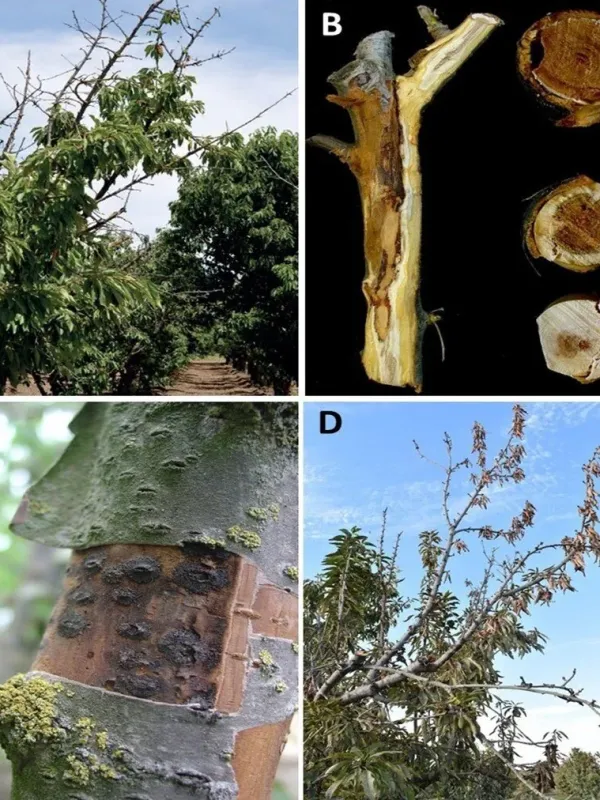
The primary symptom is the appearance of discolored, sunken areas on the bark, which may look brown, reddish, or orange. These areas often feel brittle and can easily crack under pressure.
Upon closer inspection, one will see small, raised pimple-like structures on the dead bark. During humid conditions, these pycnidia may extrude tiny, curly tendrils containing thousands of fungal spores.
As the infection progresses, the bark on the affected branch or trunk may start to split, creating deep, vertical fissures. The underlying tissues typically show signs of necrosis, turning black or dark brown.
Foliage on infected branches often becomes chlorotic, small, and sparse. In later stages, leaves may wither, curl, and drop prematurely as the supply of nutrients and water is completely cut off.
If the canker girdles the main stem or trunk, the entire tree will show systemic signs of stress, such as crown dieback, and will eventually perish if the infection reaches the vascular tissue.
Pathogen
Cytospora canker is caused by various species of fungi within the Cytospora genus. These pathogens are opportunistic, typically attacking stressed or injured trees and leading to a condition known as infectious dieback.
The fungus infiltrates the plant tissues through mechanical wounds, frost cracks, sunburned bark, or pruning cuts that have not properly healed. Once inside, the mycelium colonizes the cambium and phloem layers.
As the pathogen grows, it produces structures called pycnidia, which appear as tiny bumps on the bark surface. These structures rupture the bark, releasing spores into the environment through rain splash and wind.
The disease affects a wide range of fruit-bearing and ornamental trees, including apple, pear, cherry, plum, peach, and apricot, often significantly shortening their lifespan.
Because the fungus is a weak parasite, it thrives where the tree's natural defense mechanisms are compromised, making susceptible trees easy targets for continuous infection.
Conditions for development
The development of Cytospora is heavily influenced by abiotic stress factors. Trees weakened by environmental conditions are significantly more prone to rapid colonization by the fungus.
Severe winters followed by rapid temperature fluctuations in early spring often lead to frost cracks, which act as the most common entry points for the fungal spores.
Inadequate orchard management practices, such as lack of irrigation during drought periods or poor nutrient management, weaken the tree’s overall physiological health and its ability to defend against pathogens.
High humidity and consistent rainfall throughout the growing season provide the ideal moisture levels for spore dispersal and germination, allowing the disease to spread rapidly.
Overcrowded orchards with poor air circulation can also create microclimates that remain damp for longer periods, which exacerbates the potential for fungal growth on sensitive bark.
Why it matters
The economic impact of Cytospora canker is severe, as it causes the gradual or sudden death of scaffold branches, reducing the overall fruit yield and the tree's productive lifespan.
Since the disease is often systemic within the woody tissues, it can linger in the orchard for many years, acting as a constant reservoir for new infections every season.
Fruit quality is drastically reduced due to poor nutrient translocation. Infected trees often produce small, undersized, or deformed fruits that drop prematurely before ripening.
Management costs are high because orchardists must dedicate significant time to pruning, disinfecting tools, and monitoring for new infections, which increases the labor cost of fruit production.
In extreme cases, widespread Cytospora outbreaks can force the premature removal and replacement of entire orchard blocks, leading to significant financial losses for the grower.
Protection
Effective management begins with prevention. Maintaining tree health through balanced irrigation, proper fertilization, and reducing stress is the best defense against this fungal pathogen.
Sanitation is critical; all dead or cankered branches must be pruned out at least 10-15 cm below the visible margin of the infection to ensure the fungus is removed.
- Apply white latex paint or lime wash to trunks to prevent sunscald;
- Always disinfect pruning tools between cuts with alcohol or bleach;
- Seal large pruning wounds to prevent spore entry;
- Use copper-based sprays in early spring as a protective barrier.
If a canker appears on the main trunk, careful excision of the necrotic tissue down to the live wood, followed by a disinfectant treatment, may help save the tree if caught early.
Regular inspection of the orchard, especially after severe winter events, allows for the early detection of the disease, preventing it from spreading to healthy parts of the tree or neighboring trees.
Content graph
Connections · Cytospora canker
Most often together:
Marketplace
Products · 4


Community
Discussion
No discussions yet — be the first.