

Description
Symptoms
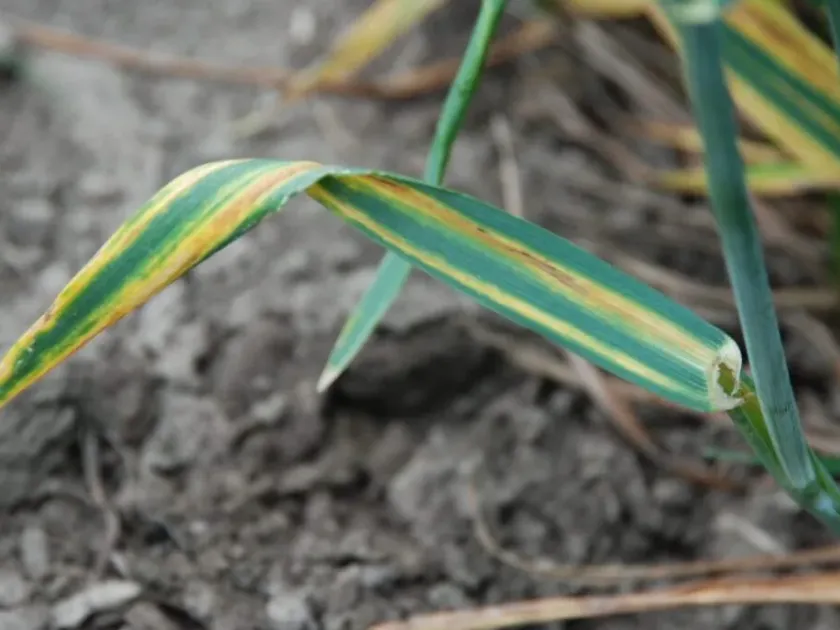
The most distinct symptom of Cephalosporium stripe is the appearance of yellow, longitudinal stripes on the leaves. These stripes follow the leaf veins and can extend the full length of the blade.
As the disease progresses, the entire leaf may yellow and die, often leading to a general chlorotic appearance of the whole plant. The stunted growth of infected tillers is also a common observation.
A diagnostic feature is the browning or darkening of vascular bundles within the stems. When stems are split open, the internal tissues show characteristic discoloration, indicating blocked transport.
Under humid conditions, a sparse white fungal growth (conidia) may appear on the surface of the stem bases. This represents the spore-producing stage of the fungus, which aids in its dispersal.
Heads on infected plants are often poorly filled or empty (whiteheads). The kernels produced are typically shriveled, light, and have poor test weight, significantly reducing grain yield.
Pathogen
The causal agent of Cephalosporium stripe is the fungus Cephalosporium gramineum (also known as Hymenula cerealis). It is a soil-borne pathogen that targets the vascular system of various cereal crops.
The fungus survives in crop residues and soil, primarily as mycelium. It is adapted to thrive in cool, moist environments, making it particularly problematic in winter wheat production regions.
Infection occurs when the fungus enters the plant through wounds in the roots or crowns, often caused by freeze-thaw cycles or soil insects. Once inside, it moves rapidly into the xylem vessels.
By colonizing the vascular tissues, the pathogen produces toxins and physical blockages that severely disrupt the transport of water and nutrients from the roots to the upper parts of the plant.
The life cycle of the pathogen is closely tied to moisture levels and soil temperatures. It can persist for several years in infested straw, waiting for conditions that favor infection.
Conditions for development
The disease development is heavily dependent on soil moisture. High levels of moisture during the fall and spring periods provide the optimal environment for the fungus to infect plant roots.
Frequent freeze-thaw cycles during the winter are a major risk factor. These cycles physically damage the roots of winter crops, creating entry points for the fungal mycelium to invade.
Short crop rotations, especially those involving continuous wheat or barley, allow the pathogen to build up high levels of inoculum in the soil, increasing the probability of severe outbreaks.
Soil compaction or poor drainage can further exacerbate the disease. Areas of a field that remain waterlogged for longer periods are usually the first to show symptoms of the stripe.
Cooler temperatures, typically ranging from 5°C to 15°C, are favorable for the activity of C. gramineum, making early spring a critical window for monitoring the disease.
Why it matters
Cephalosporium stripe is economically damaging because it causes systemic vascular collapse. The plant’s inability to transport water leads to permanent wilting, especially as temperatures rise in late spring.
The disease reduces the number of productive tillers per plant. Many infected plants die prematurely, resulting in reduced stand density and significant yield losses in affected fields.
Grain quality is negatively affected, as the limited nutrient supply prevents proper kernel development. This leads to lower marketability and potential rejection of the grain lot for milling purposes.
Infested fields may experience secondary issues, such as increased susceptibility to lodging or other opportunistic infections, which further complicates the harvest process.
Significant economic losses are incurred not only through reduced yield but also through the increased cost of implementing long-term cultural control measures to suppress the pathogen.
Protection
Crop rotation is the most effective management strategy. Growing non-host crops like oats, legumes, or oilseeds for at least two years helps reduce the inoculum level in the soil significantly.
Good soil management, including the burial of crop residues through plowing, helps accelerate the breakdown of infested straw and prevents the pathogen from spreading further.
Selecting resistant or tolerant cereal varieties is highly recommended. While complete immunity is rare, modern breeding programs offer varieties that can maintain yield despite the presence of the disease.
Adjusting planting dates can also be beneficial. Avoiding excessively early planting for winter crops can reduce the exposure time of seedlings to favorable conditions for initial infection.
Fungicide application for seed treatment or early foliar application can provide some protection against initial colonization, although these methods have limited efficacy once the disease becomes systemic.
Content graph
Connections · Cephalosporium stripe
Most often together:
Marketplace
Products · 6


Community
Discussion
No discussions yet — be the first.