

Description
Symptoms
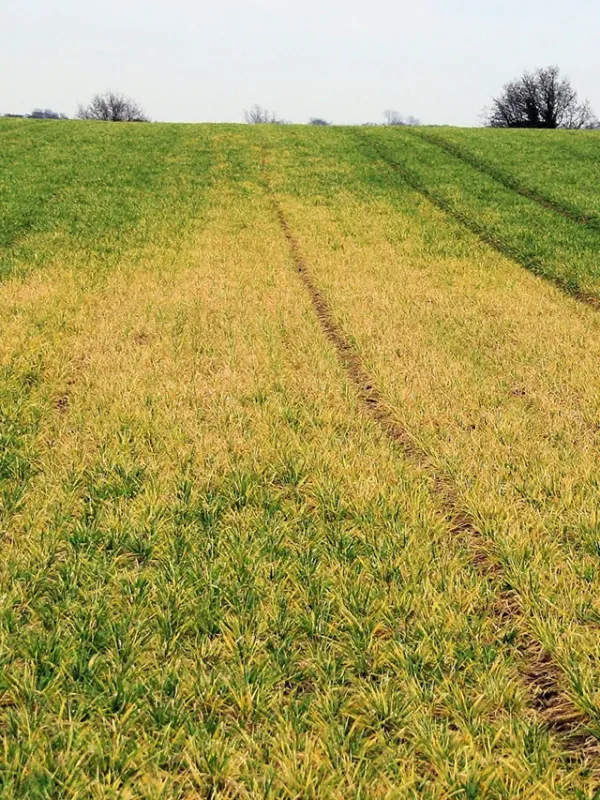
Symptoms become visible early in the spring, shortly after the crop resumes vegetative growth following the winter dormant period.
Affected leaves exhibit characteristic patterns of yellow, elongated stripes, streaks, or mosaic-like patches that may cover the entire leaf surface.
Plants often display stunted growth, reduced tillering, and an overall chlorotic appearance, making infected areas easily identifiable in the field.
Severe infestations result in leaf distortion and necrosis, which significantly diminishes the plant's capacity for photosynthesis and dry matter accumulation.
During the heading stage, infected crops may show irregular maturity, with shorter spikes and a noticeably thinner stand compared to healthy sections.
Pathogen
The Barley yellow mosaic virus (BaYMV) is the causal agent of this viral disease, belonging to the genus Bymovirus within the Potyviridae family.
The virus is soil-borne and transmitted by the plasmodiophorid protist Polymyxa graminis, which acts as an obligate vector for the viral particles.
These fungal-like organisms harbour the virus in their resting spores, which can survive in the soil for many years, making eradication virtually impossible.
Infection occurs primarily through the root system when the vector's zoospores release the virus into the barley cells under specific environmental conditions.
The systemic nature of the virus allows it to spread throughout the plant vascular system, leading to chronic infection that persists until crop maturity.
Conditions for development
The development of the disease is highly dependent on soil conditions, particularly temperature and moisture levels during the autumn sowing season.
The vector, Polymyxa graminis, thrives in cool, damp soils where temperatures range between 10 and 15 degrees Celsius, ideal for zoospore motility.
Heavy or waterlogged soils provide an environment that facilitates the movement of the vector to the roots of the young barley seedlings.
Frequent cultivation of susceptible winter barley cultivars in the same fields increases the inoculum load of the virus in the soil over time.
Reduced tillage practices may also contribute to the persistence of the pathogen by leaving the topsoil structure undisturbed, where spores remain concentrated.
Why it matters
The economic impact of Barley yellow mosaic is significant, primarily due to the substantial reduction in total grain yield and overall crop vigor.
Infected plants produce fewer grains per spike, and the individual grain weight is typically lower, resulting in poor grain filling and reduced test weight.
Crop quality is also negatively affected, as the physiological stress leads to a decrease in protein content and grain size uniformity.
In extreme cases of widespread infection, yield losses can reach up to 50%, forcing farmers to replant or abandon the most heavily damaged field zones.
Furthermore, the disease limits agronomic options, restricting the choice of high-yield varieties in areas where the soil has become heavily infested.
Protection
The most effective strategy for managing BaYMV is the deployment of resistant or tolerant barley cultivars, which prevent the virus from replicating.
Implementing crop rotation cycles that break the infection chain by using non-host crops is essential for reducing the vector population in the soil.
Adjusting sowing dates to avoid conditions that favour the activity of the vector can significantly reduce the incidence of early-stage root infection.
Improving soil drainage through structural improvements and effective land management can inhibit the conditions required for the vector's movement.
- Use of resistant cultivars.
- Strategic crop rotation.
- Optimized sowing dates.
- Enhanced soil drainage.
Reference
Connections · Barley yellow mosaic
Most often together:
Marketplace
Products · 4


Community
Discussion
No discussions yet — be the first.