
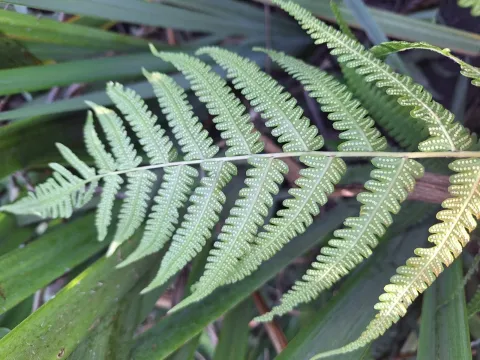
Thelypteris dentata
Thelypteris dentata
Thelypteris dentata, commonly known as the downy maiden fern, is a perennial plant belonging to the Thelypteridaceae family. It originates from tropical and subtropical regions, frequently colonizing moist, shaded forest floors and riverbanks.
What the section contains
Thelypteris dentata
Botanically, this species is characterized by its pinnate fronds that feature finely dentate margins, giving it a delicate appearance. It grows from a creeping rhizome, allowing it to spread and form dense clusters in favorable environmental conditions.
The cultural requirements are strictly linked to high humidity and indirect light. It thrives in temperature ranges between 18°C and 25°C. Excessive exposure to direct sunlight must be avoided to prevent foliar damage and drying of the fronds.
For cultivation, a well-draining, nutrient-rich, and slightly acidic substrate is essential. Incorporating organic matter such as peat moss or leaf compost, alongside perlite for drainage, creates an ideal environment for the root system to establish and thrive.
Its primary use is in ornamental horticulture, specifically for indoor settings, greenhouses, and conservatory displays. It is favored by growers for its lush green appearance and its ability to thrive in low-light indoor environments where other species might fail.
Major pests include spider mites, mealybugs, and scale insects, which often infest the foliage when humidity levels drop too low. Consistent misting and regular inspection of the undersides of the fronds are effective preventative measures.
Fungal issues, particularly root rot, are common if the soil remains waterlogged for extended periods. Ensuring a proper drainage system and allowing the top layer of the substrate to slightly dry out before watering can mitigate these risks.