
Drimys
Drimys
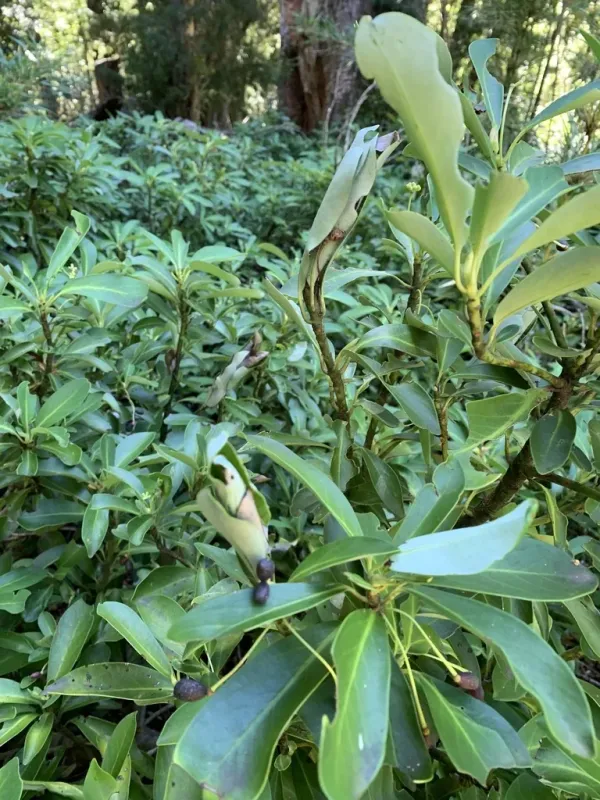
Description
Growing requirements
Drimys is a genus of evergreen trees and shrubs belonging to the Winteraceae family. Native to regions in Central and South America, as well as Australia and Oceania, these plants are primarily found in cool, humid mountain forests where moisture remains high throughout the year.
Cultivation of Drimys requires well-draining, acidic, and nutrient-rich soil. The plant thrives in partial shade, as exposure to intense, direct sunlight can damage the leaves and inhibit healthy development, reflecting its evolutionary adaptation to the forest understory.
Temperature management is a primary concern for growers. As a frost-sensitive plant, Drimys requires protection in cooler climates, making it suitable for greenhouses or container gardening where temperatures can be kept between 15 and 22 degrees Celsius.
Watering must be consistent to prevent the root zone from drying out, yet stagnant water must be strictly avoided. The root system of the Drimys is highly sensitive to hypoxia, meaning that high-quality drainage is essential for long-term health and growth.
Botanically, Drimys is recognized for its ancient evolutionary features, such as the absence of vessels in its xylem tissue. This unique characteristic makes it a subject of interest for both scientific study and ornamental horticulture due to its evergreen, leathery foliage and white, aromatic flowers.
Main diseases and pests
In indoor or greenhouse settings, the most frequent pest is the spider mite, which flourishes in environments with low air circulation. Maintaining proper humidity levels and regular misting can help prevent infestations before they become critical.
Root rot caused by Oomycetes and other soil-borne fungi is a common threat triggered by waterlogged soil. Proper soil composition, incorporating organic matter and perlite for aeration, is the primary defense strategy against these pathogens.
Scale insects can occasionally infest the branches and leaf undersides, drawing sap and weakening the plant. Early detection and manual removal, followed by the application of horticultural oils, are generally effective in managing small outbreaks.
Leaf spot diseases, often caused by bacterial or fungal pathogens, may occur if the foliage remains wet for extended periods in stagnant air. Ensuring good airflow around the plants is critical to minimizing the occurrence of these infections.
Physiological stress, often manifesting as interveinal chlorosis, usually indicates improper soil pH or an imbalance of micronutrients. Monitoring the substrate's chemical properties is essential for maintaining the overall resilience of the Drimys plant against environmental stress.