
Turkmen boxthorn
Lycium depressum
Description
Growing requirements
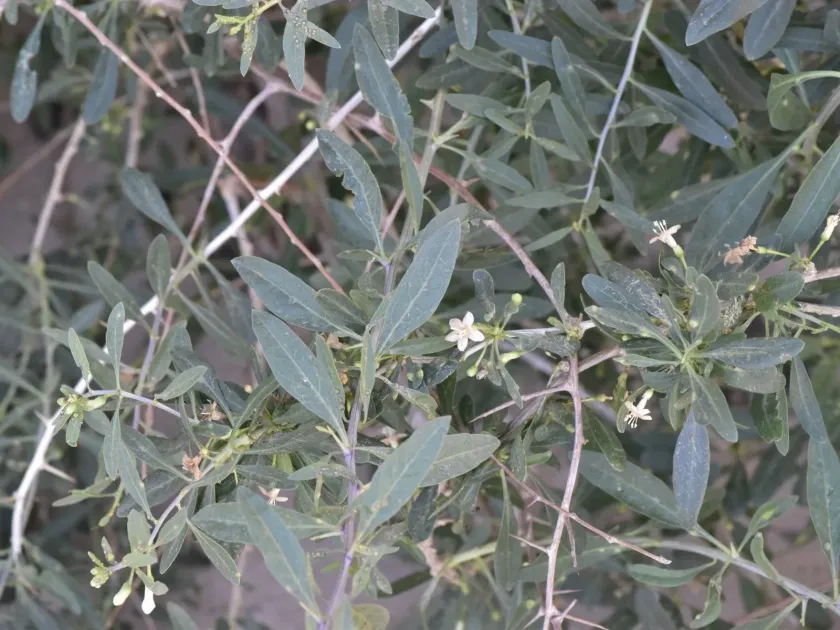
Turkmen boxthorn (Lycium depressum) is a perennial shrub belonging to the Solanaceae family. This species is highly adapted to extreme arid environments, making it a critical plant for soil stabilization and environmental restoration in desert and semi-desert regions.
In its native habitat across Central Asia, the plant thrives in saline soils, floodplains, and mountain foothills. Its robust root system allows it to efficiently extract moisture and nutrients from challenging substrates, providing stability against wind and water erosion.
The optimal growing conditions involve well-drained, sandy or loamy soils. The plant shows high tolerance for salinity, which is a major advantage for farming in areas where soil quality is poor and water resources are restricted or mineralized.
Climate adaptability is one of the most prominent features of Lycium depressum. It withstands significant temperature fluctuations between day and night and extreme seasonal shifts, which are typical of the continental climate found in its range.
Agrotechnical practices focus on early establishment. While adult plants are highly independent, irrigation during the first year of growth is vital for proper root development, ensuring long-term resilience and productivity in the subsequent years.
Yield
The agricultural and economic utility of Turkmen boxthorn is diverse, encompassing nutritional, medicinal, and ecological applications. The berries contain a complex profile of vitamins and antioxidants, which are highly valued in modern food science and dietary supplements.
In traditional medicine, the fruits are recognized for their systemic health benefits, including immune system support and metabolic regulation. The quality of these active ingredients is heavily dependent on the maturation stage during harvest and the subsequent drying methods.
Beyond human consumption, the plant serves as a vital forage resource for livestock, including camels and sheep, in dry regions. The foliage remains palatable and nutritious even when other vegetation is scarce, providing essential relief for pastoral farming systems.
Due to its dense growth habit, Turkmen boxthorn is also utilized in landscape design for creating living fences and windbreaks. It prevents topsoil loss and provides a habitat for local fauna, contributing to the overall biodiversity of managed agricultural lands.
Economic yields are stable when proper density is managed. Since the plants can remain productive for many years, the long-term investment in a boxthorn plantation is often favored for sustainable land-use projects in vulnerable desert margins.
Main diseases and pests
Typical plant health issues usually stem from waterlogged conditions or poor air circulation within the shrub canopy. Excessive moisture at the root zone can trigger rot, necessitating strict management of soil drainage and watering schedules in cultivated plots.
Pest pressures are primarily dominated by aphids and spider mites, which are common adversaries of Solanaceae species. These pests often flourish in hot, dry conditions, causing damage to the soft tissues of young shoots and interfering with the plant's photosynthetic capacity.
Powdery mildew may occur when humidity levels are persistently high, especially in densely planted areas with inadequate airflow. Regular pruning to thin the canopy is a standard and effective preventive measure to maintain plant vigor.
Integrated pest management strategies are highly recommended to ensure the berries remain free of chemical residues. Biological controls and preventive pruning are preferred over synthetic pesticides, maintaining the organic integrity of the crop.
Routine scouting is essential to identify early pest infestations. By addressing small patches of damage immediately, growers can prevent the spread of pests across the entire field, thus avoiding the need for aggressive large-scale chemical treatments.
Harvesting
Harvesting the berries is predominantly a manual process performed at the peak of biological maturity. Picking during dry weather is crucial to prevent fungal growth, as the berries are highly susceptible to spoilage if collected with excessive surface moisture.
Post-harvest handling involves cleaning and sorting the fruits to remove debris and damaged items. Using breathable containers is important to maintain quality during transport, as the skin of the berries can be delicate and prone to physical damage.
Drying the produce is carried out under shade in well-ventilated areas or in low-temperature dehydrators. Excess heat must be avoided to preserve the antioxidant activity and vitamin content that characterize the high nutritional value of the fruit.
Stored product quality is best maintained in cool, dark, and dry conditions. Hermetic sealing protects the dried berries from moisture reabsorption and insect contamination, allowing for a shelf life that extends through the off-season without significant degradation.
Plant residues from pruning can be composted to return organic matter to the soil. This practice helps maintain soil fertility in the plantation, provided that the material is free from diseases and pests that could otherwise persist in the compost pile.