
Black henbane
Hyoscyamus niger L.
Description
Sowing dates
Black henbane (Hyoscyamus niger) is a biennial plant belonging to the Solanaceae family, widely recognized for its medicinal properties and commercial value in the pharmaceutical industry.
The seeds should be sown in late autumn or early spring, as they require a stratification period for uniform germination, especially when sown before the winter season.
Optimal planting involves shallow sowing at a depth of 1–2 cm, as the seeds are small and require minimal soil cover to emerge properly in the first year of vegetation.
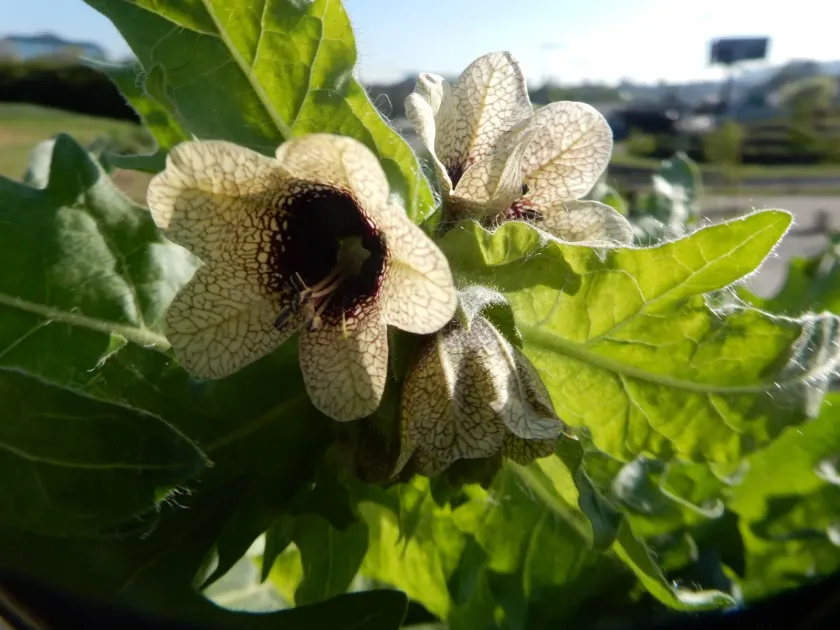
In the first year, the crop develops a basal rosette of leaves, while in the second year, it produces stems and flowers, which are the main sources of alkaloids.
Spacing between rows should be maintained at 45–60 cm to allow for efficient weeding and mechanical management of the plantation throughout the growing cycle.
Growing requirements
The crop thrives in sunny locations with well-drained, fertile soil, as it is highly sensitive to waterlogging and poor soil aeration which can damage root development.
Neutral to slightly alkaline soil pH is ideal for promoting vigorous growth and ensuring the plant can properly synthesize its secondary metabolites.
The plant is frost-hardy, making it suitable for temperate climates where it can overwinter safely before entering its reproductive phase in the second year.
Fertilization management should be precise; while moderate organic matter helps, excessive nitrogen can reduce the quality of the alkaloid content in the leaves.
Regular cultivation and weeding are essential during the early stages of the first year to prevent competition from weeds, which can significantly stunt the growth.
Yield
Yields of black henbane are typically measured in terms of dry leaf mass, ranging between 800 and 1500 kg per hectare depending on agricultural inputs.
The highest productivity is achieved in the second year of growth when the plant reaches its full flowering stage, which is the optimal time for harvesting.
Variations in yield are often observed based on the climate of the growing season, with moderate temperatures and consistent moisture levels favoring maximum biomass accumulation.
Effective management and timely harvest ensure that the alkaloid concentration (hyoscyamine and scopolamine) remains within the required pharmaceutical standards.
Modern farming practices, including targeted nutrition and integrated pest management, are crucial for sustaining competitive yield levels in professional medicinal plant production.
Main diseases and pests
Common pests include beetle species such as flea beetles and Colorado potato beetles, which feed on the foliage and can significantly reduce the marketable yield.
Fungal diseases like powdery mildew and various leaf spots are frequent challenges, especially in humid conditions where air circulation is insufficient within the dense canopy.
Crop rotation is vital to prevent soil-borne pathogens; it is highly recommended to avoid planting henbane on land previously used for other Solanaceae crops.
Integrated Pest Management (IPM) strategies, including both biological controls and targeted chemical treatments, are employed to manage infestation levels without damaging the final product.
- Foliage-eating insects
- Powdery mildew infections
- Root rot due to moisture
- Weed competition in early stages
Harvesting
Harvesting usually takes place during the mass flowering stage of the second year, as the content of essential medicinal alkaloids is highest at this growth phase.
The leaves are harvested by cutting the entire aerial part or picking individual leaves, depending on the scale and technical capabilities of the agricultural facility.
Immediate processing is necessary after harvest to avoid degradation of the medicinal compounds; the material is dried at temperatures not exceeding 45°C.
The dried raw material must be stored in cool, dry, and well-ventilated conditions to maintain its quality and potency before it is shipped to pharmaceutical processors.
Once the harvest is complete, the plot is cleared, and a new crop rotation cycle is initiated, as the plant is not viable for long-term production beyond the second year.