
Egyptian henbane
Hyoscyamus muticus L.
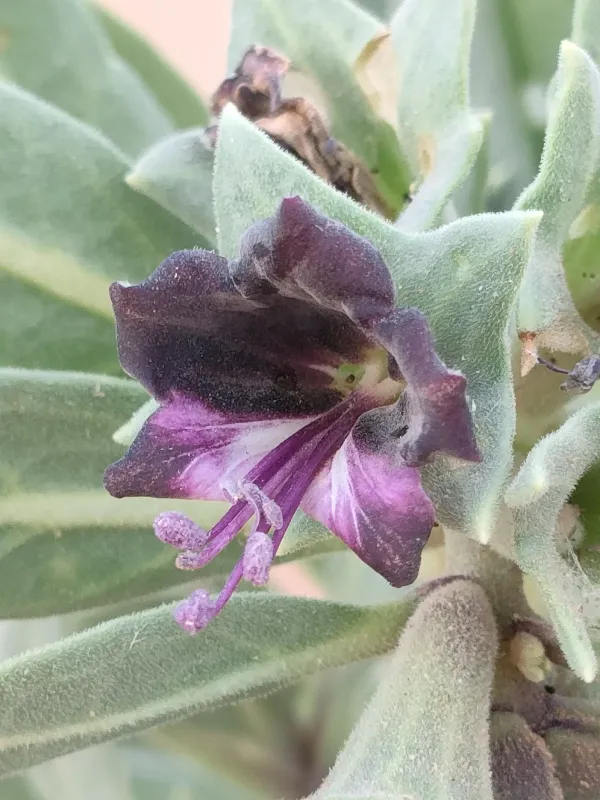
Description
Sowing dates
Sowing Egyptian henbane requires warm soil temperatures, ideally above 15 degrees Celsius, to ensure successful germination of the seeds.
The seeds are relatively small and require precise depth control, usually not exceeding 2 centimeters, to prevent burial too deep in the soil.
A row spacing of 50 to 60 centimeters is recommended to allow for adequate mechanical weeding and airflow between the maturing plants.
Pre-sowing treatment of seeds is often recommended to improve the naturally low germination rates typical for this species of Hyoscyamus.
Farmers should aim to plant in late spring to take full advantage of the long sunny days required for the plant's metabolic processes.
Growing requirements
As a member of the Solanaceae family, Egyptian henbane thrives in well-drained, fertile soils with a neutral pH level.
The plant is highly adapted to arid and semi-arid climates, requiring plenty of direct sunlight for optimal growth and development.
While drought-tolerant, supplemental irrigation during the peak growth phase significantly boosts the overall biomass and alkaloid content.
Balanced fertilization, particularly with moderate nitrogen levels, supports the lush vegetative growth essential for harvesting green leaves.
The site selection should prioritize locations with minimal competition from weeds, as the plant can be slow to establish in its initial stages.
Yield
The yield of Egyptian henbane is measured by the total weight of dried aerial parts harvested per hectare.
Optimal timing of the harvest is critical, as alkaloid concentrations vary significantly throughout the plant's life cycle.
Multi-cut systems are possible in regions with long growing seasons, allowing for increased annual output from the same planting area.
The productivity of the crop is directly correlated with the soil's nutrient availability and the frequency of effective irrigation cycles.
Consistent plant population density is the most important factor in achieving uniform and predictable yields for commercial production.
Main diseases and pests
Like many crops in the Solanaceae family, Egyptian henbane is susceptible to common pests such as aphids, which feed on the sap of young leaves.
Fungal pathogens, particularly those causing root rot, can be a major issue if the soil remains waterlogged for extended periods.
Preventive measures include strict crop rotation practices to ensure that no Solanaceous species are grown consecutively on the same plot.
Integrated pest management strategies are preferred to ensure that the final medicinal product remains free of harmful pesticide residues.
Monitoring fields during the early establishment phase is crucial to detect signs of early blight or wilt, which can quickly spread.
Harvesting
The primary harvest involves cutting the aerial parts of the plant when the flowering process has just begun to peak.
Freshly harvested material must be processed immediately to prevent degradation of the active alkaloids by heat or excess moisture.
Drying procedures are strictly controlled, typically using shade drying or low-temperature industrial dryers to maintain pharmacological quality.
Once dried, the raw material is processed through cleaning and milling stages to meet the specific requirements of pharmaceutical manufacturers.
Final storage must take place in climate-controlled environments to protect the product from ambient humidity and direct sunlight exposure.