
Hyoscyamus reticulatus
Hyoscyamus reticulatus
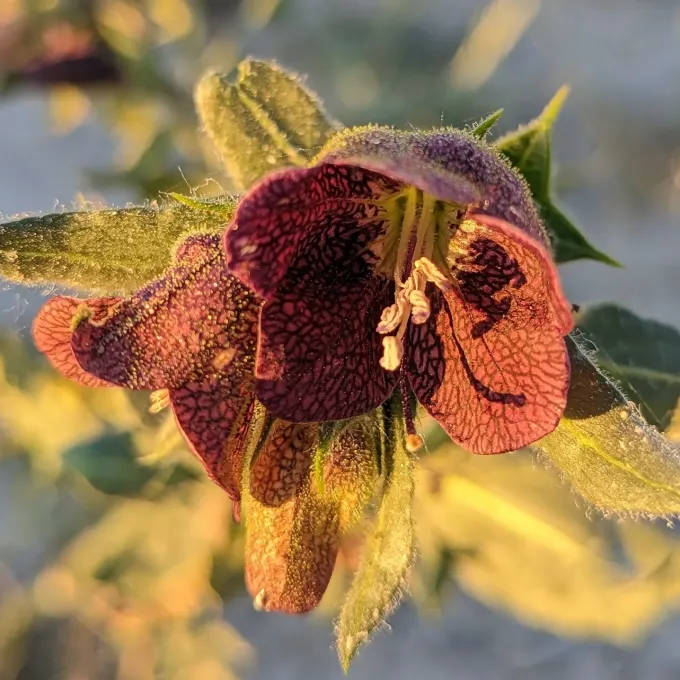
Description
Sowing dates
Hyoscyamus reticulatus is a member of the Solanaceae family, widely known for its medicinal properties. The sowing process typically occurs in late autumn or early spring, depending on the climate zone, into well-prepared, loose soil to ensure optimal seed-to-soil contact.
The seeds should be sown at a shallow depth of 1–2 cm, as they require light to germinate effectively. Mechanical precision seed drills are recommended to ensure uniform spacing and to reduce the need for manual thinning later in the growth cycle.
Maintaining row spacing of 45–60 cm is essential for efficient weed management and to facilitate the use of mechanical cultivation equipment. A clean field free of perennial weeds is critical for the healthy development of young henbane plants.
Prior to sowing, the soil should be prepared to be porous and well-drained. Deep plowing followed by seedbed compaction improves capillary action, which is vital for providing consistent moisture to the developing seeds in arid environments.
Crop rotation is mandatory to prevent the build-up of soil-borne pathogens associated with the Solanaceae family. A cycle of at least 4 years between planting this crop on the same plot is recommended to maintain soil health.
Growing requirements
This species is highly adapted to semi-arid climates, thriving in regions with high solar radiation and low relative humidity. It is naturally found in rocky and sandy habitats, indicating a preference for well-drained soil conditions.
The plant has a high requirement for light; shade significantly reduces the biosynthesis of tropane alkaloids, which are the main commercial interest. Thus, full-sun exposure is a prerequisite for high-quality medicinal raw material production.
Soil requirements focus on aeration and the absence of waterlogging. Sandy loams or light alkaline soils are ideal for preventing root rot, as the plant's root system is sensitive to excessive moisture.
Temperature range for optimal growth is between 20–28 degrees Celsius. The plant is notably resilient to diurnal temperature variations, reflecting its adaptation to mountainous and steppe environments where such shifts are common.
- Excellent soil drainage.
- High intensity of direct sunlight.
- Light, porous soil texture.
- Resistance to moderate drought conditions.
Yield
The yield of Hyoscyamus reticulatus is measured by the quality and content of its active chemical components rather than just raw biomass. The highest concentration of alkaloids is achieved during the full-flowering stage, marking the ideal window for harvesting.
Average dry mass yields range from 8 to 15 decitonnes per hectare, depending on soil fertility and irrigation management. Proper timing of harvest is crucial for ensuring the stability of the plant's pharmacological profile.
Efficient drying processes are vital to preserve the chemical potency of the harvested leaves and flowers. Temperatures during the drying phase must remain below 45 degrees Celsius to prevent degradation of the active compounds.
Nitrogen fertilization must be carefully calibrated; while it can boost total vegetative mass, excessive nitrogen often leads to a dilution of the alkaloid content, which lowers the commercial value of the medicinal raw material.
Mechanical harvesting must be executed with precision to avoid plant damage. Post-harvest handling should involve immediate cleaning and transition to drying facilities to prevent quality loss caused by heat or moisture buildup in the raw material.
Main diseases and pests
Like other members of the nightshade family, this plant is vulnerable to common pests such as aphids and the Colorado potato beetle. These pests can significantly damage the foliage and reduce the photosynthetic capacity of the plant.
Fungal diseases like late blight and powdery mildew can occur during periods of high humidity and poor ventilation. Keeping the stand density optimal and ensuring good field hygiene helps mitigate these risks.
Root rot is often a result of over-irrigation or poorly drained soils. Identifying and removing infected plants early can prevent the spread of soil-borne pathogens within the plantation.
Cutworms and other soil pests can damage the root neck, leading to stunted growth or plant death in young stands. Preventive scouting and timely use of registered biocontrol agents are recommended for effective management.
Invasive weeds are a significant threat, as they compete for nutrients and moisture. Regular mechanical weeding between rows is necessary to prevent weed encroachment that could affect both yield and quality.
Harvesting
The harvest should be timed precisely during the peak flowering phase to ensure the maximum concentration of alkaloids. Harvesting is typically done using machines that cut the stalks at a height of 10–15 cm above the soil surface.
The collected raw material requires immediate transport to a processing site to prevent fermentation or oxidation. Time management between the field and the drying facility is the most important factor in maintaining product quality.
Drying is performed in ventilated systems to ensure the uniform removal of moisture. Proper airflow prevents leaf discolouration and ensures that the final product maintains its intended chemical properties.
After drying, the raw material is processed and sorted to remove stems and impurities before final packaging. Quality assurance protocols, including lab testing for alkaloid content, are standard for commercial batches.
Storage must take place in cool, dry, and well-ventilated areas away from direct sunlight. Storing the material correctly allows for a shelf life of up to two years, maintaining its utility for pharmacological applications.