
Belladonna
Atropa belladonna L.
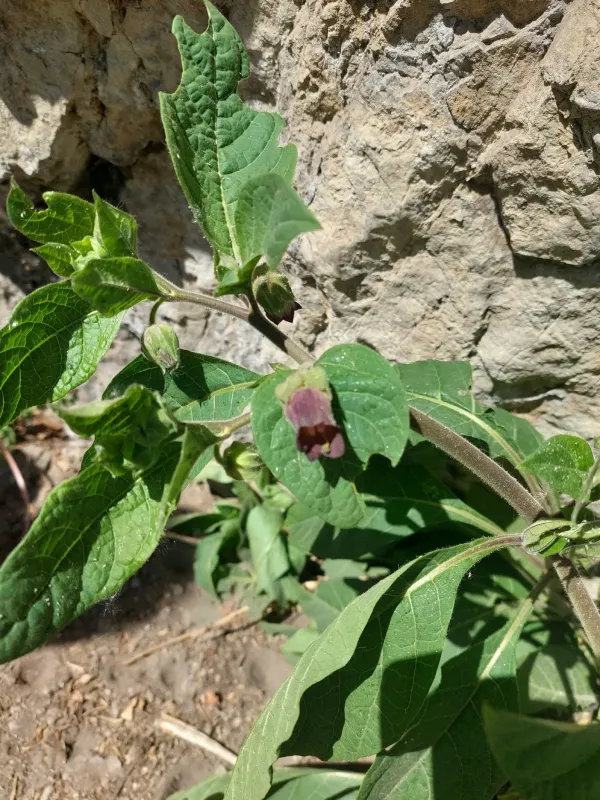
Description
Sowing dates
Sowing seeds of Atropa belladonna L. is typically performed in late autumn or early spring after the seeds have undergone a stratification process. The seeds possess a deep dormancy period and low germination energy, necessitating careful preparation before planting.
When spring sowing, the soil must be sufficiently warm, and seeds should be planted at a depth of 1.5 to 2 cm. In professional cultivation, the transplanting method is often preferred to ensure uniform stand density and more vigorous plant development.
Row spacing is maintained at 60–70 cm to provide ample space for nutrient uptake and to facilitate mechanized inter-row cultivation. This spacing is critical for maximizing yields and ensuring adequate airflow between plants.
Maintaining consistent soil moisture is crucial during the germination phase, as young seedlings are highly sensitive to surface desiccation. Using mulch can help retain soil moisture and prevent the formation of a surface crust that might hinder seedling emergence.
Seed germination is generally slow, requiring close supervision during the first few weeks. Given the right temperature regime, seedlings usually emerge within 30 days of planting in open field conditions.
Growing requirements
Belladonna belongs to the Solanaceae family and thrives in loose, fertile soils rich in organic matter. A well-drained site with a neutral to slightly acidic pH is ideal for promoting healthy root development.
The crop prefers moderate light levels and can tolerate partial shade, especially in warmer climates. Sufficient moisture is the primary requirement for growth, as drought stress significantly impacts biomass accumulation.
The plant performs poorly in heavy clay soils or areas with poor drainage, which often lead to root rot. When establishing a field, ensuring an effective drainage system is essential, especially on land with high water tables.
Fertilization should include organic amendments during autumn tillage and nitrogen-rich mineral fertilizers during the peak growing phase. Nitrogen application is key to increasing vegetative mass, which is the primary raw material for the industry.
The climate must be temperate with a sufficiently long growing season. In regions with harsh winters, protective measures are necessary, as the plant's overwintering buds are susceptible to frost damage without adequate snow cover.
Yield
Yield in belladonna is measured by the total weight of dried leaf and root material per unit area. Under optimal agronomic conditions, commercial yields can reach 8–12 decitons of dried leaves per hectare.
Productivity typically peaks during the second and third years of vegetation. In the first year, most of the plant's metabolic energy is directed towards establishing a robust root system and leaf rosettes, which naturally limits the initial harvest volume.
The primary economic use of this crop is in the pharmaceutical industry for the extraction of atropine group alkaloids. Product quality is assessed based on the concentration of these active compounds, which is influenced by harvesting timing and processing methods.
To enhance the content of bioactive substances, a balanced nutrient profile is required. Excess nitrogen can boost total biomass but may lead to a decrease in the concentration of alkaloids within the plant tissues.
Regular weeding and inter-row cultivation are essential practices that directly impact harvest mass. Weed competition during early developmental stages can significantly reduce the overall productivity of the plantation.
Main diseases and pests
Fungal diseases, including powdery mildew, late blight, and various root rots, represent the most significant threats to belladonna. These pathogens are most prevalent under conditions of high humidity and poor plantation ventilation.
Among pests, lepidopteran larvae, such as cutworms and leaf-eating caterpillars, can cause severe damage. Infestations negatively affect leaf quality and the overall longevity of the plant stand.
Integrated pest management, including crop rotation, is the preferred strategy for maintaining plant health. Chemical controls must be used judiciously, strictly following regulatory standards for medicinal crops.
Belladonna should never follow other Solanaceae crops like potatoes or tomatoes in a crop rotation scheme, as this increases the risk of soil-borne pathogens. Maintaining good sanitary conditions and proper spacing is mandatory.
Promptly removing and disposing of infected plant material is vital for localizing disease outbreaks. This practice prevents the spread of pathogens across the entire field and helps maintain overall yield stability.
Harvesting
Harvesting leaves is conducted in several stages throughout the growing season, typically starting from the budding phase. Multiple light harvests encourage the plant to produce new growth, extending the total productive period.
Mechanized harvesting must be performed carefully to avoid excessive damage to the plant, which would impair its ability to regenerate. The raw material must be free of soil particles and woody stem remnants.
Drying the collected raw material must occur immediately at temperatures not exceeding 45–50 degrees Celsius. Inadequate drying or excessive exposure to moisture can lead to degradation of the alkaloids.
Roots are harvested in autumn, when the concentration of bioactive substances is highest. The roots are thoroughly washed and dried rapidly to prevent enzymatic breakdown and preserve their pharmacological properties.
Stored raw materials should be kept in cool, dark, and dry conditions to ensure long-term stability. Proper packaging is essential to protect the product from moisture and light until it is processed by the pharmaceutical industry.