
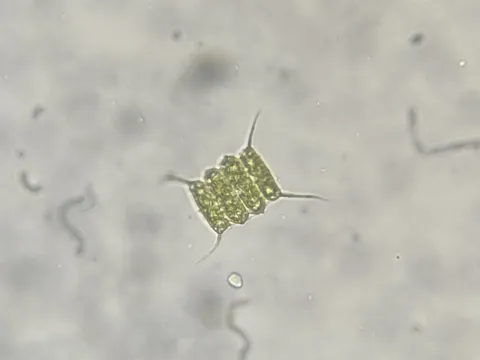
Scenedesmus
Scenedesmus
Scenedesmus is a genus of green microalgae belonging to the family Scenedesmaceae. These organisms are commonly found in freshwater environments globally and are highly valued for their rapid growth rates and robust metabolism in laboratory and industrial conditions.
What the section contains

Scenedesmus
Successful cultivation requires optimized photobioreactors that provide consistent light exposure. The temperature should be maintained between 20°C and 30°C to ensure the cells remain in the logarithmic growth phase, maximizing the yield of biomass.
The growth medium must be enriched with nitrogen, phosphorus, and essential trace minerals to sustain development. Continuous carbon dioxide supplementation is essential to drive photosynthesis and increase the cellular lipid and protein content.
Botanically, these algae typically form colonies called coenobia, consisting of 2, 4, or 8 cells. Their structural integrity makes them easier to harvest compared to unicellular algae, which is a significant advantage in large-scale agricultural production.
The economic value of Scenedesmus lies in its versatility. It is used as a nutrient-rich feed supplement in aquaculture, a potential source of biofuels, and as a biological tool for wastewater treatment and carbon sequestration.
Contamination by invasive microorganisms represents the primary risk in algae farming. Predators like rotifers or ciliates can decimate a culture in a short time, making strict environmental control and sterilization protocols vital.
Pathogenic chytrid fungi are known to infect Scenedesmus, causing rapid cell lysis. Implementing bio-security measures is essential to prevent the spread of fungal outbreaks throughout the cultivation facility.
Abiotic stress factors, such as extreme heat or sudden shifts in light intensity, can trigger a defense response that redirects energy away from biomass production. This reduces the total yield and affects the quality of the lipids produced.
The accumulation of metabolic inhibitors in the water can inhibit growth if the medium is not refreshed periodically. Monitoring the chemical parameters of the culture solution is a key task for any agricultural operator.
Inadequate gas exchange leads to carbon dioxide limitation and the buildup of dissolved oxygen. High oxygen levels can be toxic to the cells and promote the growth of unwanted bacteria, requiring sophisticated aeration systems.