
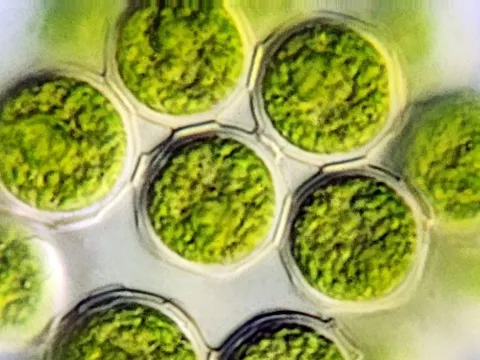
Coelastrum
Coelastrum
Coelastrum is a genus of freshwater green microalgae belonging to the Scenedesmaceae family. Unlike traditional agricultural crops, Coelastrum is not sown in soil but is cultivated within artificial photobioreactors or controlled open-pond systems.
What the section contains

Coelastrum
The initiation process involves introducing the inoculum into a nutrient-rich medium. Optimal timing for starting industrial cultivation depends on light availability and ambient temperature conditions.
Active growth of colonies is observed from spring through autumn, when natural irradiance is highest. In closed systems, cultivation can occur year-round if environmental parameters are strictly controlled.
To maintain culture density, periodic subculturing (passage) is required. This practice prevents nutrient depletion and stops the accumulation of metabolic waste products that inhibit algal development.
Selecting an appropriate strain is the most important factor in determining biomass yield. Agronomists and biotechnologists customize environmental conditions to mimic the species' natural ecological niche.
Intensive growth of Coelastrum requires specific conditions: adequate lighting, and availability of carbon, nitrogen, and phosphorus. The algae are highly efficient at sequestering carbon dioxide, making forced aeration essential in industrial setups.
The optimal temperature range for most Coelastrum species is between 20 and 30 degrees Celsius. Deviations from this range slow down cell division and significantly reduce the overall productivity of the crop.
The pH level of the culture medium must be maintained within a slightly alkaline to neutral range (7.0–8.5). Sharp fluctuations in acidity can lead to colony degradation and changes in their structural morphology.
Water used for the culture medium must undergo filtration to remove predatory microorganisms and competitive phytoplankton species. Pure cultures ensure a high yield of the final product without contamination.
Intensive light is a mandatory requirement for photosynthesis to occur. If photon flux is insufficient, the algae enter a dormant state or begin to degrade, losing stored lipids and essential proteins.
Coelastrum yield is measured by the dry mass obtained per unit volume or area of the cultivation system. Under intensive technological conditions, biomass output often exceeds that of higher plants.
The biomass of Coelastrum is valued for its high protein and carbohydrate content. Depending on light conditions, intracellular composition can be manipulated to enhance product quality.
Productivity is directly linked to the efficiency of the harvesting and separation processes. Modern methods, such as centrifugation or flocculation, allow for the extraction of up to 95-98% of the grown biomass.
When cultivation protocols are followed, the biomass output is stable and predictable. In industrial settings, this genus is considered a promising source of raw material for animal feed additives.
Continuous monitoring of the suspension's optical density allows for the timely identification of the peak growth phase, ensuring harvest occurs before the culture enters a decline phase.
The primary threat to Coelastrum is the invasion of predatory rotifers and daphnia, which can devastate a culture in a very short time. Maintaining sterility and preventing contamination are critical.
Competition from other algal species or cyanobacteria can lead to the displacement of the desired Coelastrum strain. This typically occurs if nutrient balance within the medium is compromised.
Viral infections and pathogenic fungi can also affect colonies. Signs of disease often include cellular discoloration, premature disintegration of the colony, and a foul odor in the medium.
Heavy metal contamination in the water supply is a significant risk, as algae accumulate these substances, rendering the biomass unsuitable for food or feed applications.
Excessive accumulation of metabolites in old media fosters bacterial growth, which inhibits photosynthesis and leads to the mass death of Coelastrum colonies.
The harvesting process begins once the target suspension density is achieved. Mechanical methods, including continuous filtration and separation using specialized microscreens, are commonly employed.
The collected biomass undergoes primary cleaning to remove traces of the nutrient medium. To maintain nutritional value, the product must be processed immediately after water extraction.
Drying is performed using gentle techniques, such as spray drying or freeze-drying. This preserves the algae's protein and vitamin profile effectively.
Once dried, the product is packaged in airtight containers to prevent lipid oxidation. Properly packaged Coelastrum biomass can be stored for long periods without quality loss.
Waste filtrate remaining after harvest can be recycled and returned to the cultivation cycle after nutrient levels are replenished and the medium is sterilized.