
Coelastrum microporum
Coelastrum microporum
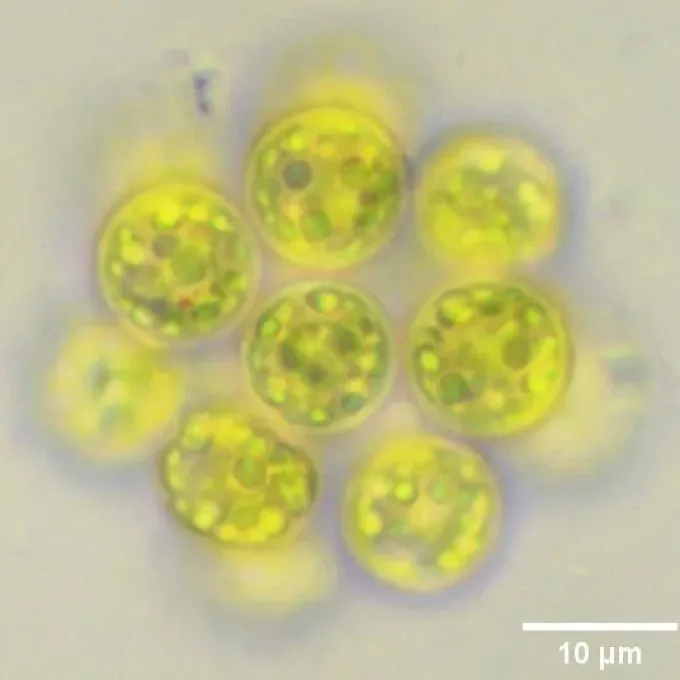
Description
Growing requirements
Coelastrum microporum is a genus of freshwater green microalgae belonging to the family Coelastraceae. These organisms are characterized by their spherical colonies, where individual cells are held together by distinct intercellular cytoplasmic processes, forming a symmetrical coenobium.
This species has a cosmopolitan distribution, found abundantly in the plankton of freshwater environments such as lakes, ponds, and reservoirs. It acts as a primary producer and a key component of the aquatic ecosystem's trophic structure.
For optimal growth in laboratory and industrial conditions, the culture requires temperatures between 20°C and 28°C. Providing a consistent and high-intensity light source is essential for maintaining efficient photosynthetic rates and biomass accumulation.
The cultivation medium must be enriched with balanced concentrations of nitrates, phosphates, and trace elements. To prevent cell sedimentation and ensure optimal gas exchange, continuous aeration or mechanical stirring is required throughout the growth cycle.
The industrial application of Coelastrum microporum is rapidly expanding, particularly in the fields of biofuel research and bioremediation. Its ability to thrive in nutrient-rich water makes it a prime candidate for removing nitrogen and phosphorus pollutants from industrial effluents.
Main diseases and pests
The primary threats to mass cultivation systems include contamination by invasive protozoa, such as rotifers or ciliates, which graze on the algae. Maintaining high sterility and using closed photobioreactor systems are critical strategies to mitigate these losses.
Viral and fungal infections pose additional risks, often leading to rapid culture collapse if environmental stressors weaken the algal cells. Regular monitoring and nutrient balancing are necessary to maintain a robust and healthy culture population.