
Mossy saxifrage
Saxifraga bryoides
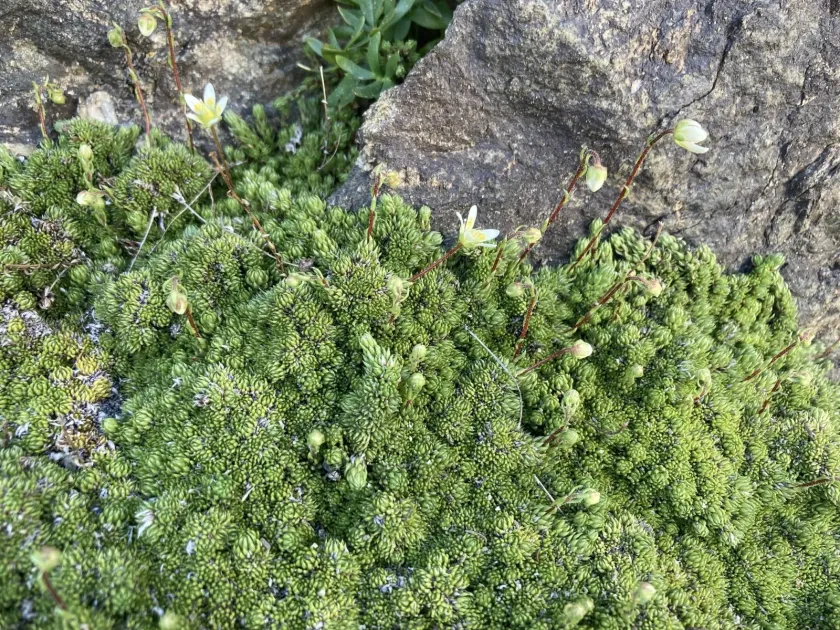
Description
Growing requirements
Saxifraga bryoides, commonly known as mossy saxifrage, belongs to the Saxifragaceae family. This perennial species is native to alpine and subalpine zones, where it naturally thrives in rocky, well-drained habitats and harsh climatic conditions.
The plant is biologically characterized by its compact, cushion-forming growth habit. The leaves are densely packed into small rosettes, which helps to mitigate moisture loss and provides the plant with structural resilience against the high-altitude winds and temperature fluctuations.
Successful cultivation requires mirroring its natural habitat. The primary requirement is a mineral-rich, extremely well-draining soil mixture. Gardeners typically utilize a combination of grit, sharp sand, and leaf mold to ensure that water never accumulates around the root zone.
In terms of climate, Saxifraga bryoides prefers cool, temperate conditions with sufficient airflow. While it appreciates morning sunlight, it is sensitive to intense afternoon heat. Providing a northern or eastern exposure in a rock garden setting is essential for the longevity of the plant.
The horticultural application of this species is largely decorative. It is highly valued for rock gardens, trough gardens, and alpine borders, where its moss-like appearance adds textural contrast and fills voids between rocks that would be inhospitable to more demanding crops.
Main diseases and pests
The primary threats to this plant are fungal pathogens resulting from excessive humidity. Crown rot is a common issue if the plant is situated in low-lying areas or if the soil is too organic and moisture-retentive, preventing proper root respiration.
Pest issues usually involve aphids or spider mites, particularly when the plants are stressed by drought or poor ventilation. Implementing a preventive care strategy, such as top-dressing with gravel to keep the foliage away from soil moisture, is critical for maintaining plant health.