
Sprengel's blackberry
Rubus sprengelii
Description
Growing requirements
Sprengel's blackberry (Rubus sprengelii) is a perennial shrub belonging to the Rosaceae family. Like most species within the Rubus genus, it exhibits a biennial growth habit, meaning that the primocanes (first-year stems) remain vegetative, while the floricanes (second-year stems) produce flowers and fruit before dying off.
This species is native to Western and Central Europe, where it thrives in natural habitats such as woodland edges, hedgerows, and brushy hillsides. It is well-adapted to temperate climates with sufficient precipitation and moderate seasonal temperature fluctuations.
Cultivation of Rubus sprengelii requires well-drained, fertile soil, ideally with a slightly acidic to neutral pH level. The species is sensitive to waterlogged conditions, which can lead to root rot and other physiological stressors, so proper site preparation is critical for long-term survival.
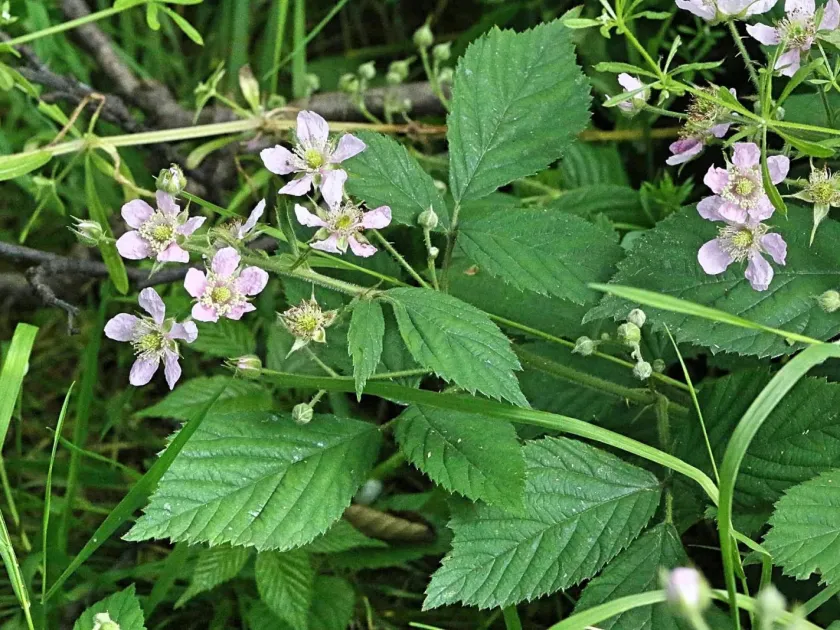
Botanically, the plant is distinguished by its arched, often prickly stems and palmately compound leaves. The foliage is notable for its textured appearance and fine hairs on the undersides, which help the plant retain moisture and tolerate exposure to sunlight.
From an agricultural standpoint, Sprengel's blackberry is primarily viewed as a genetic resource for breeding programs aiming to improve frost resistance in domesticated varieties. Locally, its fruits are collected for culinary use, including jellies, jams, and fresh consumption.
Main diseases and pests
The main phytosanitary risks for this plant include fungal diseases such as leaf rust and cane blight, which are prevalent in areas with high humidity or poor air circulation. Effective disease management involves thinning the canes and ensuring that sunlight reaches the inner parts of the plant.
Insect pests, specifically blackberry gall mites and aphids, can damage the developing berries and foliage. Integrated pest management, including the use of dormant oil sprays and the encouragement of natural predators, is recommended to keep pest populations at an acceptable level.