
Narrowleaf firethorn
Pyracantha angustifolia
Description
Growing requirements
Pyracantha angustifolia, commonly known as the narrowleaf firethorn, is an evergreen shrub belonging to the Rosaceae family. Native to China, it has become a popular ornamental plant in various temperate regions worldwide.
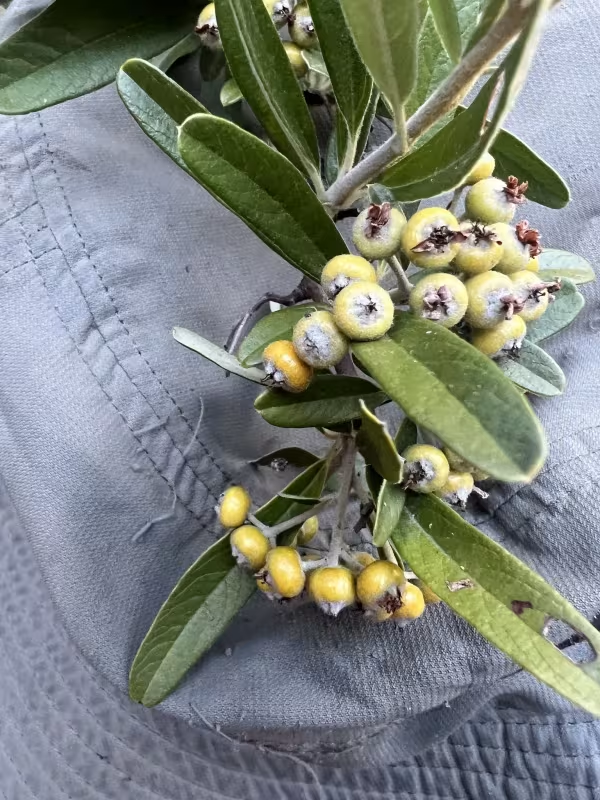
This species is characterized by its stiff, narrow leaves and long, sharp thorns. It produces clusters of white flowers in spring, followed by dense crops of bright yellow-orange berries that persist through the winter.
The plant thrives in well-drained, fertile soil and requires a sunny or partial shade location. It is known for its remarkable drought tolerance once established, making it suitable for low-maintenance landscapes.
For optimal growth, the soil pH should be neutral or slightly acidic. Regular pruning is essential to maintain the shape of the shrub and to encourage the production of healthy, new flowering wood.
Pyracantha angustifolia is primarily utilized for security hedging, screen planting, and slope stabilization. Its dense growth habit and formidable thorns provide an effective barrier against wildlife and human intrusion.
Main diseases and pests
Fire blight (Erwinia amylovora) is the most serious disease affecting this species. Infected branches should be pruned back to healthy wood and tools must be sanitized to prevent the spread of the pathogen.
Scab, a fungal disease, can cause disfiguring spots on foliage and fruit, especially in humid and stagnant air conditions. Improving airflow through regular thinning of the canopy is a recommended practice.
Aphids are common pests that colonize new growth, causing leaf curling and potential damage to the plant's vigor. Insecticidal soaps are typically sufficient to manage localized infestations.
Scale insects may attach to the woody stems, draining the plant's resources. Horticultural oils applied during the dormant season are effective in controlling scale populations.
Maintaining a balanced irrigation schedule and avoiding overhead watering during cool, damp weather significantly reduces the likelihood of fungal infections and helps maintain overall plant health.