
Pyracantha rogersiana
Pyracantha rogersiana
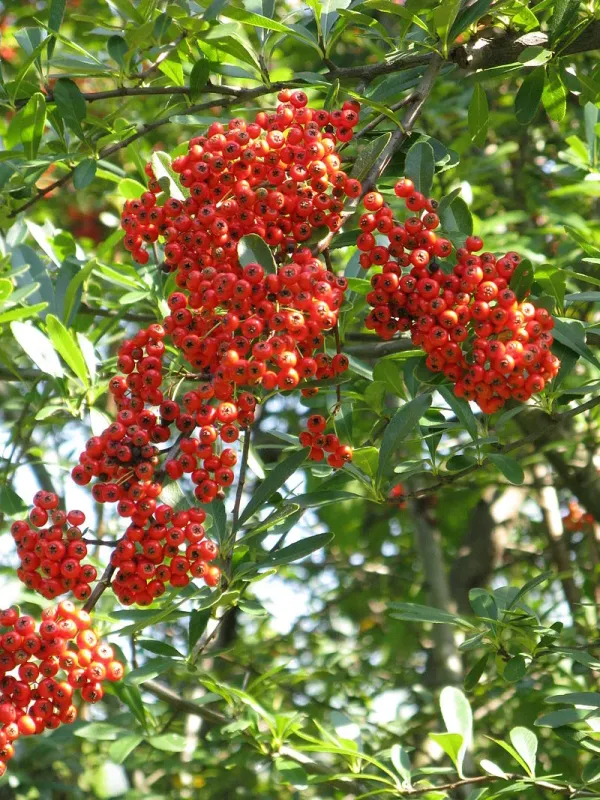
Description
Sowing dates
Pyracantha rogersiana is an evergreen member of the Rosaceae family. Propagation is commonly achieved through seeds that require cold stratification for at least two to three months before sowing in spring.
Vegetative propagation via semi-hardwood cuttings is the preferred method for maintaining specific cultivar traits. Cuttings should be taken in late summer and placed in a well-draining medium under controlled humidity.
When sowing, provide a light, sandy potting mix. Ensure consistent moisture during the germination period, which may take several weeks depending on environmental conditions.
Once established in nursery containers, the seedlings can be transplanted to their permanent location, provided the ground is sufficiently warmed and risk of heavy frost has passed.
Correct spacing is essential for hedge development, allowing enough room for the shrubs to mature without overcrowding, which can reduce air circulation.
Growing requirements
This species thrives in full sun or partial shade. Exposure to direct sunlight is critical for maximizing the production of its signature vibrant berries in the autumn.
The plant is adaptable to a wide range of soil types but prefers fertile, well-drained loams. It is vital to avoid waterlogged soils, as Pyracantha is sensitive to root rot.
Maintenance involves routine pruning to shape the shrub and remove dead or diseased wood. It responds well to hard pruning if rejuvenation is required after several years.
While drought-tolerant once established, supplemental watering is recommended during prolonged dry spells to maintain plant vigor and foliage density.
Winter protection is advisable in colder climates, specifically applying mulch around the base to prevent the root system from freezing during extreme temperatures.
Main diseases and pests
Fire blight (Erwinia amylovora) is the most severe threat to this species, often causing rapid browning and death of branches. Prompt removal of infected tissue is mandatory.
Scab infection can affect both foliage and fruit, reducing the ornamental value of the plant. Fungicide treatments in early spring can help manage the spread of spores.
Aphids are frequent pests, often congregating on soft new growth. They can be managed with insecticidal soaps or systemic treatments if the infestation becomes significant.
Scale insects may also affect the stems and branches. Regular monitoring and the application of horticultural oils during the dormant season are effective control measures.
- Fire blight
- Scab
- Aphids
- Scale insects
- Red spider mites