
Flowering quince
Chaenomeles lagenaria
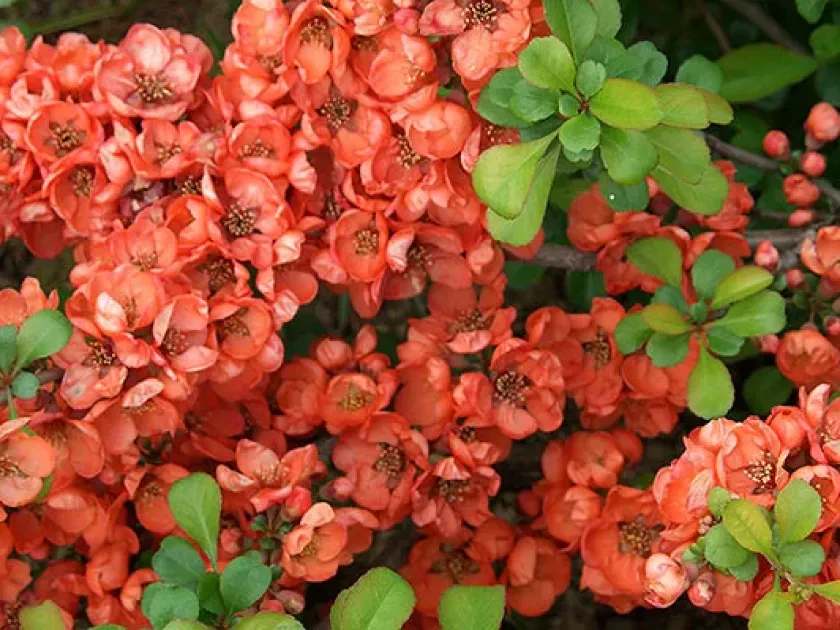
Description
Sowing dates
Seeds of the flowering quince should ideally be sown in the autumn, allowing them to undergo natural stratification in the soil throughout the winter months.
For spring sowing, it is essential to stratify the seeds in a cool, moist environment for at least two to three months to break dormancy effectively.
Seeds are placed in light, well-draining soil at a depth of approximately 1 to 2 centimeters, ensuring the substrate remains consistently moist until germination occurs.
Propagation through semi-hardwood cuttings is also a common practice, typically performed in late summer to ensure successful root development before winter.
When transplanting young shrubs, it is best to do so during the dormant season, either early spring or late autumn, to minimize root stress and maximize establishment.
Growing requirements
Chaenomeles lagenaria, a member of the Rosaceae family, is a deciduous shrub native to East Asia, prized for both its vibrant spring flowers and its aromatic, edible fruit.
This shrub thrives in full sun, which is necessary for abundant flowering and optimal fruit production, though it can tolerate light shade in hotter climates.
It prefers fertile, slightly acidic to neutral soil that is well-drained, as the plant is susceptible to root rot if left in waterlogged conditions for extended periods.
While mature plants are highly cold-hardy, younger specimens may require protection from late spring frosts to safeguard emerging blossoms and tender shoots.
Consistent moisture is key during the first years of growth and in dry summer months to support healthy development and ensure consistent fruit set.
Yield
The fruit of the flowering quince is a hard, fragrant, pome-type fruit that matures in autumn, turning a bright golden-yellow color upon ripening.
A well-maintained mature bush can produce a significant yield, providing fruits that are highly valued for their high pectin content and intense, lemony flavor.
The fruits are rarely eaten raw due to their hardness and acidity, but they are excellent for processing into jellies, jams, preserves, and traditional liqueurs.
Regular pruning is essential to remove older, non-productive wood and to encourage new growth, which subsequently increases the overall yield of the plant.
By implementing proper fertilization cycles, growers can ensure consistent fruit production for decades, as the plant is known for its longevity and resilience.
Main diseases and pests
Common issues for the flowering quince include susceptibility to fungal diseases like fire blight, which can severely damage branches if not identified and pruned promptly.
Pests such as aphids and spider mites can infest the foliage, particularly during dry spells, potentially weakening the plant and reducing its photosynthetic capacity.
Maintaining good air circulation through proper pruning and avoiding overhead watering helps to significantly reduce the risk of common fungal infections.
Chemical control, if necessary, should be applied with caution, choosing systemic insecticides or fungicides appropriate for the specific stage of the plant's growth.
- Regular inspection of branches for signs of disease or pest activity.
- Sanitizing pruning tools between cuts to prevent pathogen spread.
- Improving soil drainage to support overall plant vitality and resistance.
Harvesting
Harvesting should be performed carefully, using shears to snip the fruits off the branch to avoid causing damage to the plant's sharp, thorn-covered stems.
Fruits are gathered in late autumn, typically before the first heavy frost, ensuring they are intact and free from mechanical damage to extend their shelf life.
If picked slightly early, the fruits will continue to ripen and release their characteristic perfume when stored in a cool, well-ventilated location.
Proper storage in a cool basement allows the fruit to be preserved for several months, making it available for culinary use throughout the winter season.
Cleaned and sorted fruit should be kept in a single layer to avoid bruising, ensuring the highest quality for subsequent food processing applications.