
Flowering quince
Chaenomeles hybrids
Description
Growing requirements
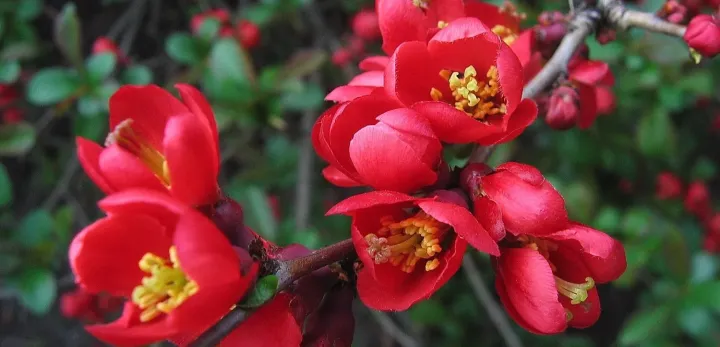
Chaenomeles × superba, known as the flowering quince, is a hybrid shrub belonging to the Rosaceae family. It is a cross between Chaenomeles japonica and Chaenomeles speciosa, valued for its brilliant early spring blossoms and aromatic, edible fruit.
The plant thrives in full sun, which is crucial for prolific blooming and fruit development. While it adapts to various soil types, it performs best in well-drained, slightly acidic soil. Extremely alkaline soils should be avoided to prevent nutrient deficiencies like chlorosis.
Regarding moisture, the shrubs are moderately drought-tolerant once established. However, during the fruit-set period, consistent soil moisture is required to ensure the development of high-quality, plump fruit. Avoid waterlogged conditions to prevent root rot.
Winter hardiness is one of the main features of this hybrid. It can withstand significant temperature drops, although in colder regions, young plants benefit from mulch around the base. Annual pruning is essential to maintain the shape and remove old wood.
Fertilization with balanced organic matter in the early spring supports vigorous growth. Regular monitoring of the bush structure allows for removing crossing or damaged branches, which helps maintain the health and vigor of the specimen.
Main diseases and pests
Common diseases affecting flowering quince include apple scab and brown rot. These are primarily caused by fungal spores favored by humid conditions. Proper sanitation, such as removing fallen leaves and infected fruit, is a vital control measure.
Pests such as aphids and scale insects often attack new spring growth. They drain the plant's sap and can leave behind honeydew, which promotes the growth of sooty mold. Neem oil or insecticidal soaps are effective organic remedies.
Fire blight can occasionally be a concern, causing branches to appear scorched. Pruning back affected parts at least 20 cm into healthy wood and disinfecting tools between cuts is the standard protocol for managing this bacterial infection.
To minimize disease pressure, ensure sufficient spacing between plants to allow for airflow. Good ventilation dries out foliage rapidly after rain, reducing the environment necessary for most leaf-borne pathogens to thrive.
Integrated pest management strategies are recommended. By introducing beneficial predatory insects to the garden, growers can keep aphid populations in check without relying solely on synthetic chemical sprays.
Harvesting
The harvest season for flowering quince typically occurs in late autumn, once the fruits have turned a bright yellow and become fragrant. The fruit is very hard and should be harvested with shears to avoid damaging the branches.
Fruits are best picked before the first heavy frost. Even if they are not fully soft, they will ripen in storage. Handling the fruit with care is important, as bruising leads to rapid decay and loss of storage life.
Storage should be in a cool, dark, and well-ventilated area. Properly stored, the fruits can last for several months, gradually filling the room with their intense, lemon-like scent, making them excellent natural air fresheners.
Processing is required before consumption, as the raw fruit is quite astringent and hard. They are widely used for making jellies, preserves, marmalades, and infusions due to their high pectin and vitamin C content.
Beyond culinary uses, these plants serve as excellent hedging material. Their thorny, dense growth habit makes them a perfect barrier, while their aesthetic appeal ensures they are a staple in both functional and ornamental gardens.