
Aremonia agrimonoides
Aremonia agrimonoides
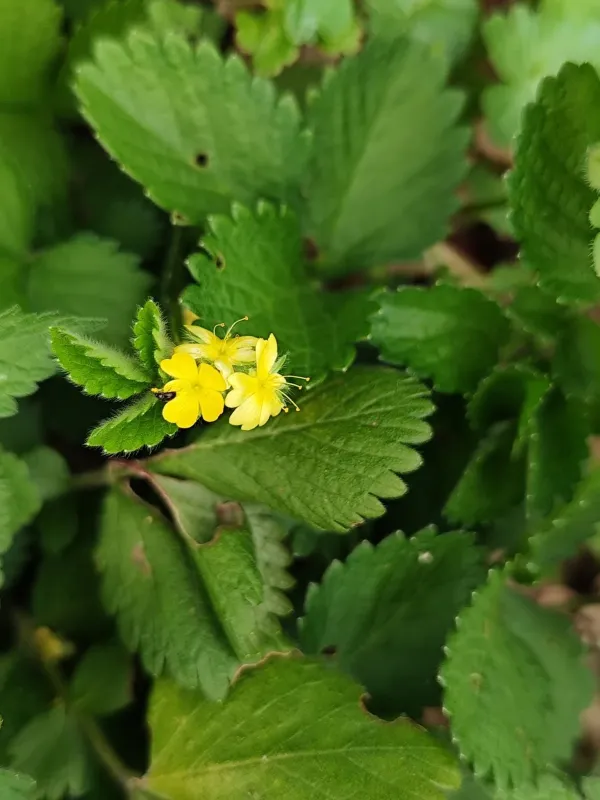
Description
Growing requirements
Aremonia agrimonoides is a perennial herbaceous plant belonging to the Rosaceae family. It is recognized for its rosette-forming habit and its preference for woodland or shaded environments, making it a valuable species for shaded garden beds.
Regarding soil requirements, this plant thrives in moist, humus-rich, and well-draining soils. It is particularly well-suited to sites that mimic its natural forest habitat, where leaf litter and organic matter contribute to soil fertility and moisture retention.
Climatically, the species is robust and hardy, capable of enduring cold winter temperatures typical of temperate regions. It does not require high light intensity, as it is physiologically adapted to grow under the canopy of larger plants or trees.
Cultural practices include occasional division of established clumps to prevent overcrowding. Watering should be regular but cautious, ensuring the soil remains moist without becoming waterlogged, which could lead to root decay.
Its primary use is in ornamental landscaping as a groundcover. Because it forms a dense, low-growing carpet, it serves as an effective suppressive cover for weeds in woodland-style gardens and understory planting schemes.