
Goldenseal
Hydrastis canadensis L.
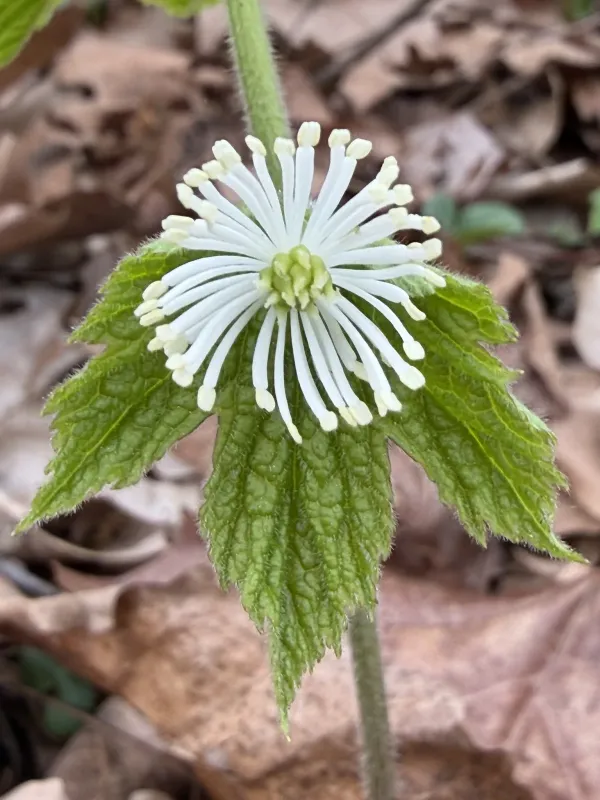
Description
Sowing dates
Goldenseal (Hydrastis canadensis) is a perennial herb belonging to the Ranunculaceae family, native to the deciduous forests of eastern North America. Cultivation usually relies on vegetative propagation through rhizome division during the dormant season.
Planting is best performed in early spring or mid-to-late autumn. Rhizome cuttings, which must include healthy buds, are placed at a depth of approximately 5-7 centimeters into prepared soil.
Seed propagation is possible but challenging due to a long stratification process required for germination and slow initial growth rates. Therefore, division remains the industry standard for establishing new plots.
When planting, it is crucial to maintain proper spacing to allow for adequate airflow between plants, which is vital for disease prevention in high-humidity environments.
Goldenseal establishes itself slowly and often requires several years to mature. Proper mulching after planting is essential to mimic the forest floor environment and preserve soil moisture levels.
Growing requirements
Goldenseal thrives in shaded environments, mimicking its natural habitat. Full sun is detrimental and will cause leaf burn, so artificial shade cloths are often necessary for commercial production.
The ideal soil is rich in organic matter, loose, and slightly acidic, with a pH ranging from 5.5 to 7.0. Adding leaf compost is highly recommended to improve soil structure and fertility.
Moisture control is a critical aspect of goldenseal cultivation. The soil must be kept consistently moist but well-drained, as saturated soil can quickly lead to root rot and other fungal issues.
The plant is somewhat sensitive to temperature fluctuations. Providing a thick layer of organic mulch helps regulate soil temperature and protects the rhizomes during winter freezes.
Fertilization should be managed carefully with organic sources, as synthetic high-potency fertilizers can stress the plant. Consistent monitoring of weed competition is necessary, especially during the first two years of growth.
Yield
The yield of goldenseal is determined by the biomass of dried rhizomes, which are valued for their high concentrations of alkaloids, namely hydrastine and berberine. Harvesting typically takes place after a 3 to 5-year growth cycle.
Yields vary significantly based on site selection, soil fertility, and management intensity. Under ideal conditions, one can expect yields of approximately 1000–1500 kg of dry root per hectare.
Quality control during growth includes monitoring soil nutrients to ensure the plant synthesizes sufficient levels of active secondary metabolites. Stressors such as pests or water imbalance can reduce overall yield.
Because goldenseal is a slow-growing crop, the economic return is spread over several years. Investment in quality planting stock is one of the most effective ways to ensure higher long-term productivity.
Post-harvest processing, including careful washing and controlled drying, is essential for maintaining the market value of the crop and ensuring it meets pharmacopeial standards.
Main diseases and pests
Botrytis (gray mold) is a primary threat to goldenseal, particularly in high-humidity conditions where airflow is insufficient. Regular scouting and removing affected leaves are necessary.
Rhizoctonia and other soil-borne fungi can cause root rot, often leading to rapid plant decline. Maintaining healthy drainage and avoiding over-watering are the best preventative measures.
Slugs and snails are the most common pests, as they feed on the young foliage in the spring. Barrier methods or approved biological controls should be implemented when necessary.
Aphids can also occasionally infest the plants, causing leaf curling and potential virus transmission. Maintaining overall plant vigor helps mitigate the impact of such infestations.
- Botrytis (Gray Mold)
- Rhizoctonia (Root Rot)
- Slugs and Snails
- Aphids
- Mosaic Virus
Harvesting
Harvesting usually occurs in late autumn, once the foliage has withered and died back. This timing ensures that the alkaloids are translocated back into the rhizomes, resulting in maximum potency.
Rhizomes are carefully excavated from the soil, ensuring minimal mechanical damage. After harvest, they are washed thoroughly with clean water to remove soil debris.
Drying must be conducted in controlled environments at temperatures not exceeding 45°C. Excessive heat will degrade the chemical compounds, reducing the quality of the medicinal product.
Once dried, the rhizomes are graded, sorted, and stored in moisture-proof, light-shielded containers. Proper storage conditions are essential for maintaining the integrity of the bioactive alkaloids.
Efficient post-harvest logistics ensure that the product reaches the processing facilities in optimal condition. Adhering to these strict practices preserves the medicinal reputation of the crop.