
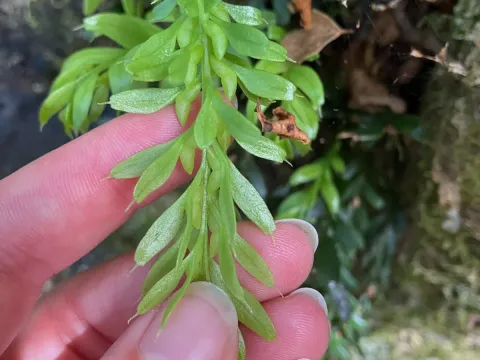
Tmesipteris
Tmesipteris
Tmesipteris is a genus of primitive vascular plants belonging to the family Psilotaceae. While not considered an agricultural crop, these plants hold significant scientific value due to their simple morphology, representing an ancient lineage of land plants.
What the section contains


Tmesipteris
These plants are native to the tropical and subtropical regions of the Southern Hemisphere, particularly common in Australia, New Zealand, and various Pacific islands. They are predominantly found as epiphytes on the trunks of tree ferns.
Botanically, Tmesipteris lacks true roots and leaves. Its vegetative body consists of a stem bearing simple leaf-like enations and underground rhizomes covered in rhizoids that anchor the plant to its substrate.
Growth requirements are extremely specific, revolving around high ambient humidity and shaded environments. Tmesipteris forms an obligate symbiotic relationship with mycorrhizal fungi, which are essential for the germination of spores and nutrient uptake.
Cultivation outside of natural environments is rarely successful. Propagation typically requires sterile conditions and specialized substrates that mimic the humid bark environment of host trees, ensuring consistent moisture levels.
The primary threats to Tmesipteris populations are habitat destruction and climate change. Deforestation and the removal of host tree ferns directly lead to the localized extinction of these specialized epiphytes.
In greenhouse settings, pathogenic fungi present the greatest challenge. Poor air circulation and excessive substrate moisture quickly cause rot within the delicate rhizoid system and stems.
Pests such as spider mites and mealybugs are significant threats in controlled environments. These pests can rapidly infest the plant, causing severe damage to the thin, delicate tissues of the enations.
Chemical sensitivity is a hallmark of this genus. Standard fertilizers, herbicides, and insecticides often cause immediate phytotoxicity, as the plant lacks the complex defense mechanisms of higher-order agricultural crops.
Environmental fluctuations, particularly prolonged exposure to dry air or water quality with high mineral content, inevitably lead to rapid desiccation and the cessation of growth in Tmesipteris specimens.