
Tmesipteris tannensis
Tmesipteris tannensis
Description
Growing requirements
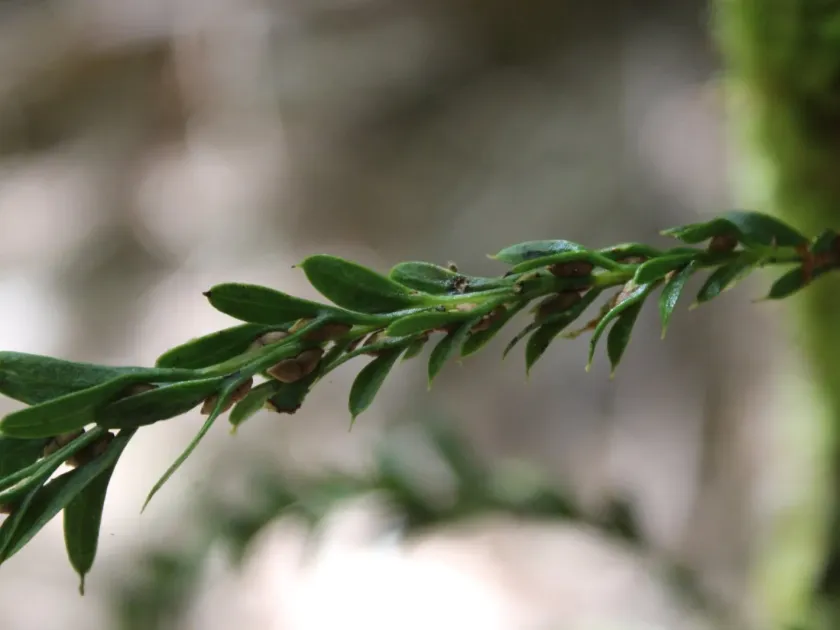
Tmesipteris tannensis is a fascinating member of the Psilotaceae family. It is a primitive vascular plant that typically lives as an epiphyte on tree ferns, particularly Dicksonia squarrosa, within its native habitats in New Zealand.
The plant structure consists of pendulous, branched stems featuring small, scale-like leaves. It lacks true roots, relying on rhizoids for attachment and nutrient absorption from the decaying debris on host tree trunks.
Environmental requirements are extremely strict. The plant thrives only in high-humidity microclimates with cool, stable temperatures. It is highly intolerant of dry air, which causes rapid desiccation of the delicate stems.
Regarding substrate, it necessitates a loose, organic mixture that mimics the mossy surfaces of forest trees. Effective drainage is paramount, as the rhizoids cannot tolerate prolonged saturation in a compact, waterlogged medium.
Cultivation is rarely successful outside of specialized botanical facilities due to its dependence on specific soil mycorrhizae. These symbiotic fungi are essential for the germination and long-term health of the plant.
Main diseases and pests
Fungal pathogens represent the most significant threat. Poor air circulation coupled with high humidity often leads to root rot, which is usually fatal for these epiphytic specimens.
Pests such as spider mites and scale insects can easily infest the plant in artificial conditions. Due to the slow growth rate of Tmesipteris, even minor pest damage can severely stunt its development for a long period.
Water quality is a critical issue, as the plant is highly sensitive to dissolved minerals. Accumulated salts in the substrate quickly cause marginal browning and tissue necrosis of the vegetative parts.
Excessive temperature fluctuations are detrimental to the plant's metabolism. It requires a stable environment and will show stress symptoms, such as stem curling or yellowing, when exposed to heat spikes.
Physical disturbance of the rhizoids during repotting is another major threat. The plant is extremely fragile, and any damage to the attachment structures significantly reduces its ability to absorb nutrients.