
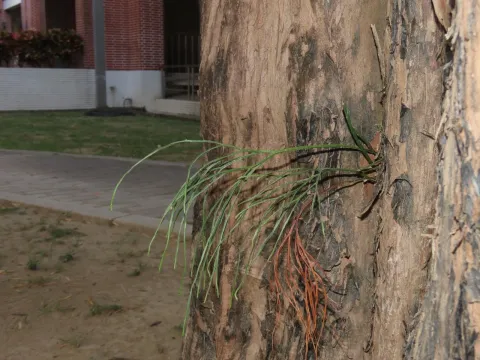
Psilotum
Psilotum
Psilotum, commonly known as the whisk fern, is a genus of primitive vascular plants belonging to the family Psilotaceae, representing a lineage that has changed little over millions of years.
What the section contains

Psilotum
These plants are native to tropical and subtropical regions worldwide, thriving in humid, sheltered environments ranging from tree trunks to nutrient-rich forest floors.
The morphology of Psilotum is distinct due to the complete absence of true roots and leaves; instead, it relies on underground rhizomes and dichotomously branching green stems for photosynthesis.
Cultivation requires maintaining a consistently humid environment with bright, indirect light, closely mimicking the shaded canopy of its natural tropical home.
A well-draining, porous substrate is essential for healthy development, often consisting of a mixture of bark, charcoal, and moss to facilitate proper gas exchange for the rhizoids.
The most significant threat to Psilotum in greenhouse cultivation is the development of root and rhizome rot, typically caused by waterlogged soil conditions and poor air circulation.
Insects such as mealybugs and scale insects may infest the stems, potentially leading to stunted growth if left unmanaged in a controlled environment.
Fungal infections can spread rapidly in highly humid settings, requiring careful monitoring of moisture levels and the implementation of proper ventilation systems.
Excessive salinity in irrigation water can accumulate in the substrate, negatively impacting the plant's delicate tissues and overall vigor.
Regular maintenance, including the removal of dead stem tissue and careful inspection of the substrate, is vital to prevent the establishment of pests and diseases.