
Thelepogon elegans
Thelepogon elegans
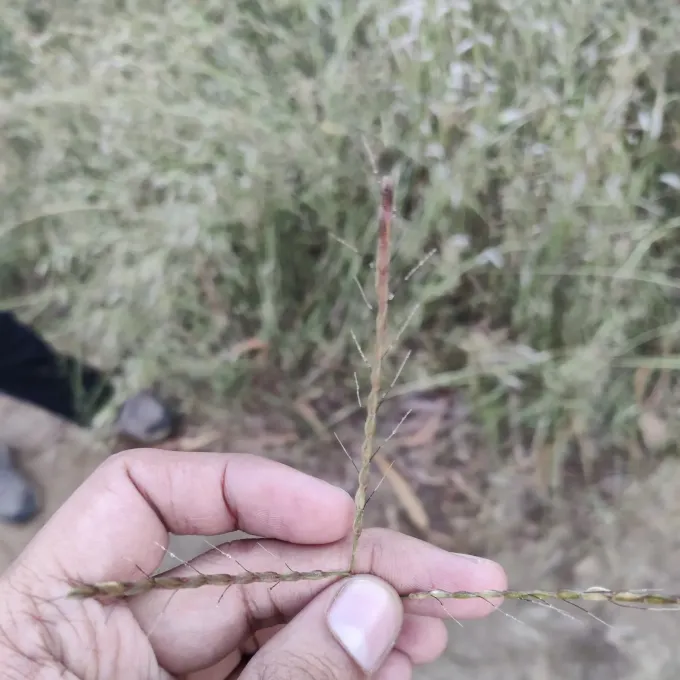
Description
Sowing dates
Thelepogon elegans is an annual grass species belonging to the Poaceae family, primarily adapted to warm and humid climatic conditions. Understanding its biological cycle is essential for successful cultivation in agricultural systems that favor fast-growing annual forages.
Sowing should be performed when soil temperatures are consistently above 20 degrees Celsius. This ensures rapid germination and establishment of the seedlings, which are quite sensitive to cool weather during their initial development phases.
The seeds are small and should be sown at a shallow depth of approximately 1–2 centimeters. Proper seed-to-soil contact is critical, and lightly rolling the field after sowing can significantly improve emergence rates by ensuring adequate moisture availability.
Field preparation requires fine tilling to eliminate clods and suppress early weed growth. Clean seedbeds allow the crop to establish quickly without competition for light, water, or nutrients, which is vital for achieving a uniform stand.
Monitoring for seedling density is advised to ensure optimal spacing. If the stand is too thick, plants may become thin and weak, whereas optimal spacing encourages vigorous tillering and increases the overall biomass production potential.
Growing requirements
This species thrives in tropical climates where high temperatures and regular precipitation occur. It is strictly sensitive to frost and cold stress, which means its growing season must be entirely free of freezing temperatures to reach maturity.
Soil requirements for Thelepogon elegans include well-draining textures, such as sandy loams, that prevent waterlogging. While the plant requires moisture, poor drainage is a leading cause of root health degradation and fungal infections.
The plant is highly heliophilic, meaning it requires full exposure to sunlight for maximum photosynthetic activity. Growth is significantly stunted under shaded conditions, leading to poor stem development and lower nutritive quality of the forage.
Maintaining balanced soil fertility is key, with a focus on nitrogen to promote vegetative growth. Regular monitoring of nutrient levels ensures that the crop can maximize its growth rate during the short, intensive growing season characteristic of this species.
Irrigation management is necessary in regions with seasonal rainfall patterns to avoid moisture stress during the vegetative stages. Consistent water availability allows the plant to maintain high sugar content in the stems, improving its palatability.
Main diseases and pests
The primary threats to Thelepogon elegans include various fungal diseases that thrive in high-humidity, warm environments. Root rot and foliar rusts are commonly observed when air circulation is poor or drainage is inadequate.
Insect pests such as grasshoppers and certain types of caterpillars can cause significant damage to the foliage. Monitoring programs should be in place to detect early signs of infestation and prevent large-scale defoliation of the crop.
Weed management is critical in the early stages of development. As an annual, the crop can be quickly outcompeted by more aggressive invasive weeds, necessitating early-season mechanical or chemical control measures to protect the yield.
Inappropriate harvest timing can lead to unintended pest pressure, as weakened plants become more susceptible to secondary pathogens. Maintaining vigorous plant health through correct fertilization is the best natural defense against most threats.
Storage pests, such as rodents and moisture-loving insects, pose a danger to harvested hay. Storing the crop in clean, elevated, and pest-proof facilities is standard procedure for minimizing losses post-harvest.
Harvesting
The main objective of harvesting Thelepogon elegans is to secure high-quality fodder for livestock. The timing of the harvest is crucial, as the protein content and digestibility decline rapidly once the plant begins its reproductive phase.
Optimal harvesting occurs just before the peak flowering stage. At this point, the stems remain soft and succulent, providing the best nutritional profile for cattle and other herbivores before the plant invests its energy into seed production.
Harvesting involves mowing the standing crop and allowing it to wilt in the field. Drying processes should be managed carefully to preserve the green color and nutritional integrity, which are easily lost under excessive sun exposure or rain.
Under favorable management conditions, multiple harvests are possible. The regrowth capacity of the crop allows for a secondary harvest if moisture and soil fertility remain adequate following the primary cut of the season.
Proper storage is essential to prevent the degradation of stored fodder. Bales should be stored in ventilated, dry areas to protect the crop from moisture, heat buildup, and biological decay, ensuring it remains safe for animal consumption throughout the storage period.