
Gynerium sagittatum
Gynerium sagittatum
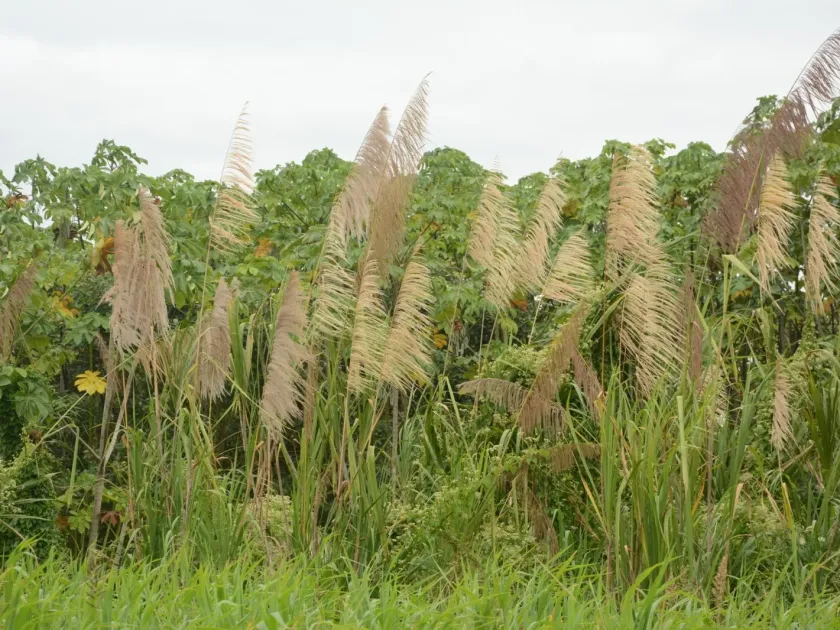
Description
Sowing dates
Gynerium sagittatum is primarily propagated through vegetative methods, specifically using rhizome cuttings or offsets which ensure genetic uniformity of the plantation.
Planting is ideally scheduled for the beginning of the rainy season to allow the root systems to establish firmly in the soil without requiring extensive manual irrigation.
Fields should be prepared through deep plowing to improve soil aeration, which facilitates the rapid expansion of the extensive rhizome network characteristic of this species.
Optimal spacing typically ranges between one and two meters, depending on whether the primary objective is fiber production or creating protective windbreaks.
Initial weed management is critical during the first three months of growth, as the young shoots can be outcompeted by aggressive weeds in their early developmental stages.
Growing requirements
Belonging to the Poaceae family, Gynerium sagittatum is a giant perennial grass native to the tropical regions of Central and South America, frequently found along riverbanks.
The plant thrives in deep, fertile, and moist alluvial soils, exhibiting high resilience to fluctuations in water tables and occasional inundation common in tropical climates.
Full sun exposure is a mandatory requirement for healthy development; shaded areas result in thinner, less durable canes that lack the necessary mechanical strength.
The species requires a tropical climate with consistent temperatures, as it is highly sensitive to frost which can irreversibly damage the terminal growth buds.
Soil pH preference is broad, although the plant shows optimal performance in slightly acidic to neutral soils with a high organic matter content.
Yield
The yield of Gynerium sagittatum is measured by the biomass of mature canes, which can be harvested annually once the plantation reaches its full productive capacity.
Productivity is highest in managed plantations where nutrient levels are maintained, allowing for a dense and rapid regrowth of stalks after each harvesting cycle.
Quality parameters for the yield include cane diameter, flexibility, and fiber density, which are essential for its application in construction and artisanal crafts.
With correct agricultural management, a single plantation can remain productive for many years, providing a sustainable source of raw materials for local industries.
Efficiency is further improved by selective harvesting, where only mature canes are removed, allowing younger shoots to continue developing undisturbed.
Main diseases and pests
Pest management primarily focuses on controlling stem borers and certain beetle larvae that can compromise the structural integrity of the cane stalks.
Fungal pathogens such as rusts and leaf spots can proliferate in high-humidity environments, necessitating good airflow and space management within the field.
Rodents represent a significant threat to established plantations, as they often utilize the hollow structure of the canes to create nests and shelters.
Integrated pest management strategies, including the removal of debris and natural predator encouragement, are preferred over broad-spectrum chemical interventions.
Regular inspection of the plantation is advised to identify early signs of nutrient deficiency or disease outbreaks, preventing localized issues from spreading.
Harvesting
Harvesting is performed by cutting the mature canes at the base, usually utilizing sharp manual tools or mechanized systems designed for high-density grass crops.
Post-harvest processing involves stripping the leaves and sorting the canes by size, which ensures consistent quality for subsequent manufacturing processes.
Properly harvested canes should be dried in well-ventilated conditions to prevent internal rot and the development of mold, which can degrade fiber quality.
The rapid regenerative ability of the plant after cutting makes it a highly sustainable crop, capable of providing multiple annual harvests from the same rootstock.
The durability of the dried canes allows for efficient storage and long-distance transport, making this plant a valuable commodity for local and export markets.