
Brown's lovegrass
Eragrostis brownii
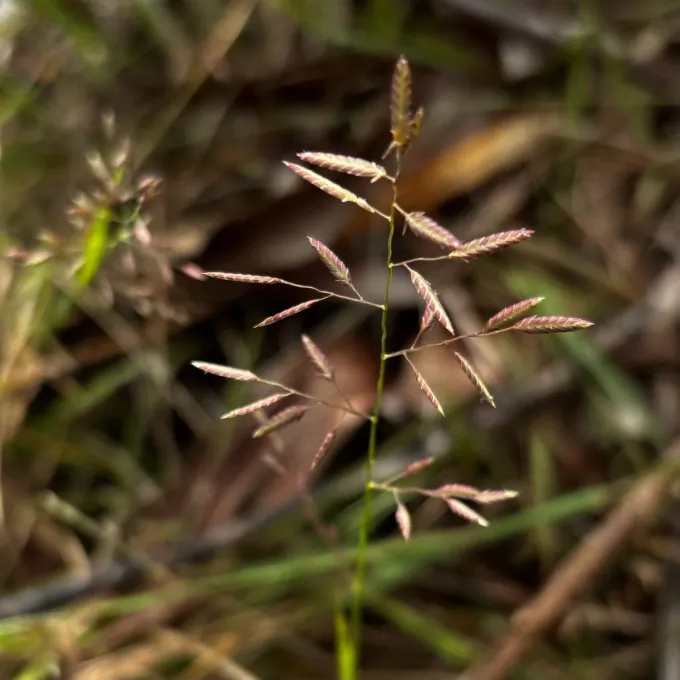
Description
Growing requirements
Brown's lovegrass (Eragrostis brownii) is a hardy perennial grass species belonging to the Poaceae family. Native to the Australian continent, it is well-regarded for its resilience and ability to thrive in diverse ecological conditions.
The plant exhibits significant drought tolerance, making it an excellent choice for revegetation projects in arid and semi-arid environments. It performs well on a variety of soil textures, including nutrient-poor sandy soils.
Cultivation requires full sun exposure to maintain high productivity. As a warm-season grass, it capitalizes on elevated temperatures during the growing season to produce substantial biomass for livestock.
Its botanical structure includes a dense root system that provides excellent soil stabilization. This feature is particularly valuable for preventing wind and water erosion in degraded grazing areas.
Agricultural use focuses primarily on grazing. While it is less palatable at maturity compared to early growth stages, proper rotational grazing can maximize the nutritional yield of the stands.
Main diseases and pests
Eragrostis brownii is generally considered robust, with few major diseases threatening its survival under normal conditions. Pathogen resistance is one of the primary reasons for its use in permanent pasture improvement.
Leaf rust may occur in areas with poor airflow or consistently high humidity. However, such instances are rarely severe enough to necessitate chemical intervention in extensive grazing systems.
Insects like grasshoppers and lepidopteran larvae can occasionally cause localized damage to the foliage. Monitoring is recommended during periods of high insect population density.
Competition from invasive weeds remains the most significant threat, especially during the establishment year. A clean seedbed and proper sowing density are crucial for successful colonization.
Management practices such as overgrazing significantly threaten the long-term viability of the stand. Adopting a rest-period strategy helps maintain plant vigor and root health.