
Water whorlgrass
Catabrosa aquatica
Description
Growing requirements
Water whorlgrass (Catabrosa aquatica) is a perennial grass species belonging to the Poaceae family. It is distinctively adapted to wetland habitats, typically growing in shallow water, along stream banks, and in boggy meadows.
The plant thrives in saturated soil conditions, requiring consistent moisture to support its growth. It prefers nutrient-rich alluvial or organic soils and is highly sensitive to drought, making it an excellent indicator of stable hydrologic conditions.
Its natural range covers most of the temperate Northern Hemisphere. Due to its preference for damp environments, it is most common in floodplain ecosystems where it contributes to the overall stability of the riparian soil structure.
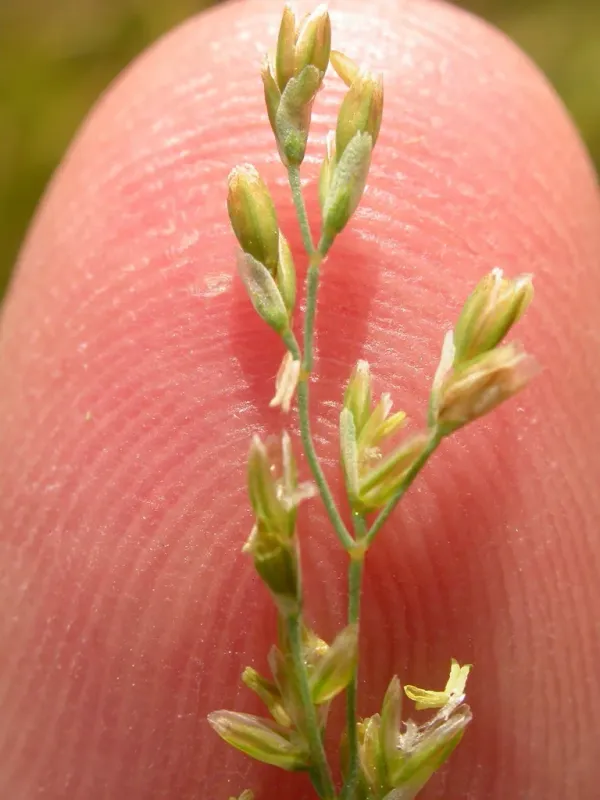
Botanically, it is characterized by creeping, stoloniferous stems that root at the nodes. This growth habit allows it to form dense mats or clumps, effectively stabilizing soil in moist areas where other grasses might fail to establish.
Climatically, it is well-adapted to cooler temperate zones, though it requires specific water levels throughout the growing season to reach its full development of 20 to 60 centimeters in height.
Yield
In agricultural settings, water whorlgrass is primarily utilized as a forage grass in natural wetland pastures. It is known for its high palatability for livestock, particularly during the early spring and summer months.
The yield of green biomass depends heavily on the consistency of the water supply and the fertility of the underlying soil. In well-maintained floodplains, it provides a reliable source of nutritious feed for grazing animals.
Beyond its value as fodder, it serves an important ecological role by preventing soil erosion along stream banks and irrigation ditches, which is beneficial for maintaining agricultural land integrity.
While not typically farmed as a monoculture crop due to its specific moisture requirements, it is a key component of diverse wetland hay meadows, contributing to their high nutritional output for ruminants.
Management strategies should focus on sustainable grazing practices. Given the soft nature of its typical habitat, careful control of livestock density is necessary to prevent excessive trampling of the root systems.
Main diseases and pests
The primary threat to water whorlgrass populations is the drainage of wetlands and marshes for land development or intensive agricultural conversion, which destroys its essential growth environment.
Like many perennial grasses, it is susceptible to fungal infections such as rusts and powdery mildew, especially in environments with stagnant air or poor water circulation.
Herbivory by both domestic livestock and wildlife can be a factor, though it is usually a natural part of the lifecycle; however, overgrazing in sensitive areas can lead to rapid degradation of the vegetation cover.
Invasive plant species can outcompete water whorlgrass, particularly when human activity alters the nutrient balance or water quality of the surrounding ecosystem.
Pollution, including chemical runoff from nearby farms or heavy metals from industrial sources, can drastically reduce the health of the plant and its ability to thrive in its native niche.