
Blepharidachne bigelovii
Blepharidachne bigelovii
Description
Growing requirements
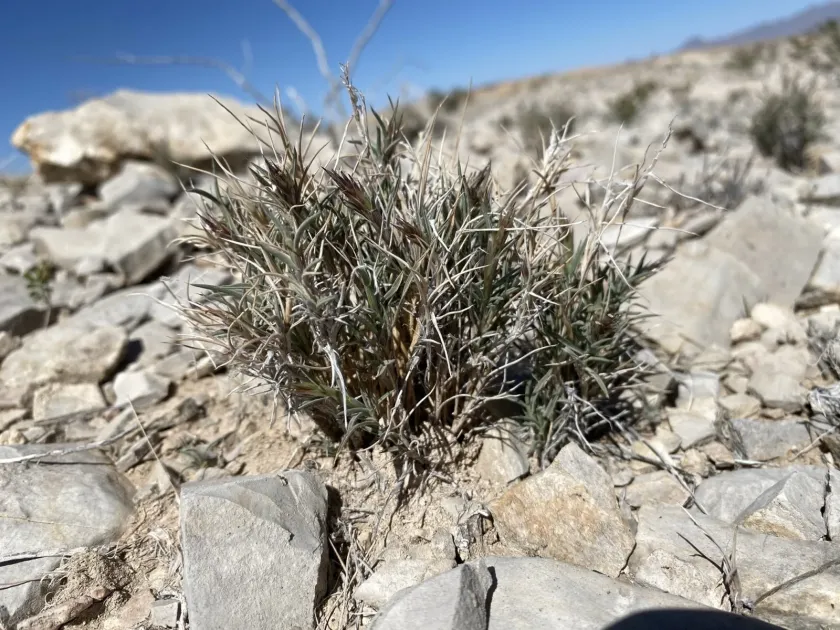
Blepharidachne bigelovii is a perennial grass species belonging to the Poaceae family. It is recognized for its extraordinary ability to thrive in extreme arid environments where most vegetation cannot survive due to water scarcity.
The native range of this species is centered in the southwestern United States and parts of Mexico. It is typically found in desert scrub habitats, rocky outcrops, and areas characterized by high solar radiation and sparse, unpredictable rainfall.
Botanically, it forms dense, low-growing mats or tufts. The foliage is stiff and often glaucous, providing a protective mechanism against intense heat and high rates of evapotranspiration typical of desert ecosystems.
For cultivation, this species requires specific soil conditions, primarily focusing on excellent drainage. It thrives in gritty, sandy, or rocky soils and fails in heavy, clay-rich environments that retain moisture for prolonged periods.
Agricultural management is minimal. The species does not require fertilizers or irrigation once established, as it is perfectly adapted to nutrient-poor and dry conditions. It is a highly resilient plant suited for challenging environmental restoration projects.
Yield
The economic value of Blepharidachne bigelovii is largely environmental rather than agricultural in the traditional sense. It plays a critical role in preventing soil erosion and stabilizing desert terrain against wind-driven movement.
While not a primary forage crop, it provides limited grazing utility in semi-arid rangelands. The biomass production is relatively low, making it unsuitable for large-scale hay production or intensive livestock feeding systems.
Research interest focuses on the grass's drought-tolerance mechanisms. Scientists analyze its physiological adaptations to potentially transfer these traits into more productive cereal crops through modern breeding techniques.
In ornamental horticulture, the plant is gaining attention for xeriscaping applications. Its unique texture and growth form make it an ideal choice for water-wise gardens and low-maintenance landscape designs in hot climates.
No specific yield metrics are tracked for this wild species. Future utilization strategies involve sustainable seed harvesting to support restoration efforts in arid lands where native plant cover has been degraded by industrial activities.
Main diseases and pests
The primary threats to Blepharidachne bigelovii populations are related to habitat destruction and climate change. Urban sprawl and the development of energy projects in desert areas often lead to direct destruction of its natural habitats.
The introduction of invasive non-native plant species represents a significant biological threat. These invaders often compete for limited water resources and may disrupt the delicate balance of the desert soil crust, which the grass relies upon.
Overgrazing in sensitive areas can also compromise the plant's ability to regenerate. Because the growth rate is slow in arid conditions, even minor physical damage from machinery or high-density livestock traffic can take years to recover.
Pathogen risks are generally low due to the harsh environment which limits the spread of most fungi and bacteria. However, changing precipitation patterns might increase the risk of rare, localized soil-borne diseases.
Climate-induced desertification may paradoxically lead to the loss of this species if the environment becomes too dry even for its extreme adaptations. Maintaining viable seed banks is therefore crucial for the future conservation of this plant.