
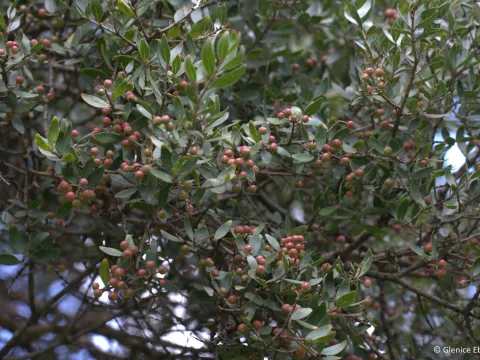
Olinia
Olinia
The Olinia genus belongs to the Oliniaceae family, consisting of evergreen trees and shrubs native primarily to the mountainous and forest regions of Southern and Eastern Africa.
What the section contains


Olinia
Botanically, Olinia plants are characterized by their opposite, leathery leaves and small, often fragrant flowers, which appear in clusters and add to the plant's horticultural appeal.
Regarding climate conditions, these plants thrive in subtropical environments, requiring consistent ambient temperatures and protection from severe frost or excessive heat waves.
Optimal growth is achieved in well-draining, nutrient-rich soils that possess good aeration properties, preventing the accumulation of water around the root zone.
During the active growing season, Olinia benefits from moderate, consistent watering and diffused sunlight, which mimics the conditions of their native canopy-shaded habitats.
The most common agricultural threats for Olinia include soil-borne fungal pathogens that target the root system, particularly when planting substrate lacks proper drainage.
Foliar diseases such as powdery mildew can occur in environments with high humidity and poor air circulation, necessitating frequent monitoring of the foliage density.
Insect pests like scale insects or aphids may infest the woody stems and tender leaves, requiring integrated pest management strategies to protect the plant's structural integrity.
Prevention remains the best strategy, involving the removal of deadwood and the maintenance of a clean growing environment to deter the spread of pests and diseases.
Proper spacing is crucial when cultivating Olinia to ensure adequate ventilation, which significantly reduces the incidence of fungal outbreaks in denser plantation layouts.