
Olinia emarginata
Olinia emarginata
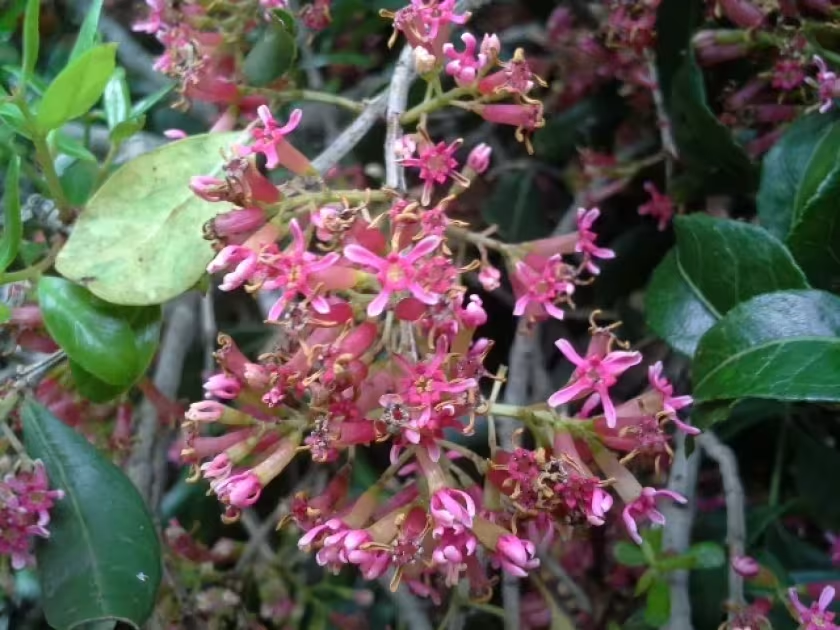
Description
Growing requirements
Olinia emarginata, commonly known as the mountain olinia, is an evergreen tree or large shrub that belongs to the Oliniaceae family. It is prized in horticulture for its dense, glossy foliage and its ability to act as a significant landscape feature.
The plant is native to the diverse regions of South Africa, typically found in wooded ravines, on rocky slopes, and along stream banks. This geographical origin highlights its adaptability to varied environmental conditions, including moderate drought.
Cultivation requires well-drained, nutrient-rich soils that support a robust root system. While it prefers sunny to partially shaded locations, it is vital to ensure that the soil does not remain waterlogged, as poor drainage is a primary cause of physiological stress.
Standard agronomic practices for this species include occasional pruning to maintain a desirable shape and periodic mulching to conserve moisture. Although it is relatively low-maintenance once established, young plants need consistent irrigation during their first few years.
The primary use of Olinia emarginata is ornamental, making it an excellent candidate for hedges, privacy screens, or as a focal point in a native garden. Its aesthetic appeal is enhanced by seasonal changes in leaf coloration and small, delicate flowers.
Main diseases and pests
Disease management for this species is largely focused on preventing fungal issues, such as leaf spot, which can occur during periods of high humidity. Proper spacing to allow for adequate air circulation is the most effective preventative measure.
Pest issues usually involve common sap-sucking insects like scale insects or mealybugs, especially in sheltered or greenhouse environments. Integrated pest management, focusing on monitoring and biological control, is recommended for long-term plant health.