
Plume poppy
Macleaya microcarpa
Description
Sowing dates
Sowing of Macleaya microcarpa seeds is primarily carried out in the spring when soil temperatures reach 10–12 degrees Celsius. Late autumn sowing in late October is also possible, allowing for natural seed stratification over the winter.
For spring sowing, seeds require prior stratification at low temperatures for 30–45 days to enhance germination energy. Seeds should be sown at a depth of no more than 0.5–1 centimeter in light soil.
The plant propagates well through vegetative methods, specifically rhizome division, which helps maintain cultivar traits. Division is performed in early spring or late summer, planting segments at a distance of 50–60 centimeters from each other.
Seedlings develop quite slowly and require diligent weed control during the first weeks. The optimal planting pattern involves row spacing of 60–70 centimeters to ensure effective crop maintenance and care.
As a perennial crop, Macleaya can be cultivated in the same location for 5–7 years without a significant decline in biomass productivity.
Growing requirements
Macleaya microcarpa, a member of the Papaveraceae family, originates from the mountainous regions of China. The plant prefers well-lit areas but can tolerate light shade, which does not significantly impact alkaloid accumulation.
The crop has high requirements for soil fertility: it performs best on humus-rich loams with a neutral or slightly acidic pH. A crucial condition is the absence of stagnant groundwater, as the plant roots are prone to damping off.
Stable irrigation is necessary during dry periods, especially during the phase of active above-ground biomass growth. However, excessive moisture combined with low temperatures can lead to root system decay.
In temperate climates, the culture shows sufficient winter hardiness; however, in harsh snowless winters, mulching with peat or compost is recommended. The plant has a robust root system, making it resistant to strong winds.
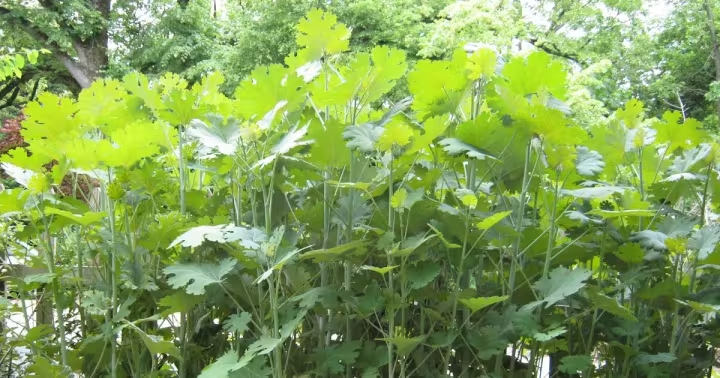
Macleaya responds actively to the application of organic fertilizers, such as rotted manure or compost, which stimulates rapid development of stems that can reach up to 2 meters in height.
Yield
The economic value of Macleaya lies in its accumulation of bioactive compounds, primarily the alkaloids sanguinarine and chelerythrine. Productivity of dry above-ground biomass, under optimal management, ranges from 30 to 50 centners per hectare.
The highest concentration of therapeutic components is observed during the flowering phase. It is during this period that the primary harvest of green mass is recommended for subsequent pharmacological processing.
Yield depends on the age of the plantation: maximum levels are typically achieved in the third or fourth year. After the fifth year, alkaloid content may begin to decline, necessitating the renewal of plantings.
To maximize alkaloid yield, timely nitrogen and potassium fertilization is required at the beginning of the vegetative period. Proper drying of the raw material is a critical factor and should be conducted at temperatures of 50–60 degrees.
Processed biomass is utilized for manufacturing preparations with antiseptic, anti-inflammatory, and fungicidal properties in human and veterinary medicine.
Main diseases and pests
Macleaya microcarpa features high phytosanitary resistance due to the presence of specific alkaloids that repel many pests. Nevertheless, in high-humidity conditions, the development of fungal diseases is possible.
Root rots, caused by improper soil drainage, pose the primary danger. Prevention includes adhering to crop rotation and avoiding planting in waterlogged areas.
During hot and dry spells, plants may be infested by spider mites, leading to premature yellowing of the leaves. In cases of massive infestation, approved insecticides with short pre-harvest intervals are applied.
Occasional leaf spotting caused by pathogenic fungi may occur. It is recommended to remove and destroy damaged plant debris at the end of the season to prevent infection spread in the following year.
Pests like aphids rarely cause serious damage, as the plant sap is toxic to many insects. However, visual monitoring of leaf condition throughout the season is necessary for timely intervention.
Harvesting
Harvesting is performed during the mass flowering phase, as this is when alkaloid concentration in the leaves and stems peaks. Typically, this period falls in July and August.
The above-ground part of the plant is cut at a height of 10–15 centimeters from the soil level. Using sharp tools prevents damage to the root system and ensures vigorous regrowth for the following season.
Immediately after cutting, the biomass must be shredded to accelerate the drying process and prevent raw material self-heating. Drying is carried out in forced-air dryers or well-ventilated rooms protected from direct sunlight.
Properly dried material should have a greenish-brown color and a characteristically bitter taste. Readiness is determined by stem brittleness: they should snap easily rather than bend.
After drying, the raw material is cleaned of impurities and packed into sacks or bales for transport to processing facilities, where therapeutic components are extracted.