
Lapeyrouse poppy
Papaver lapeyrousianum
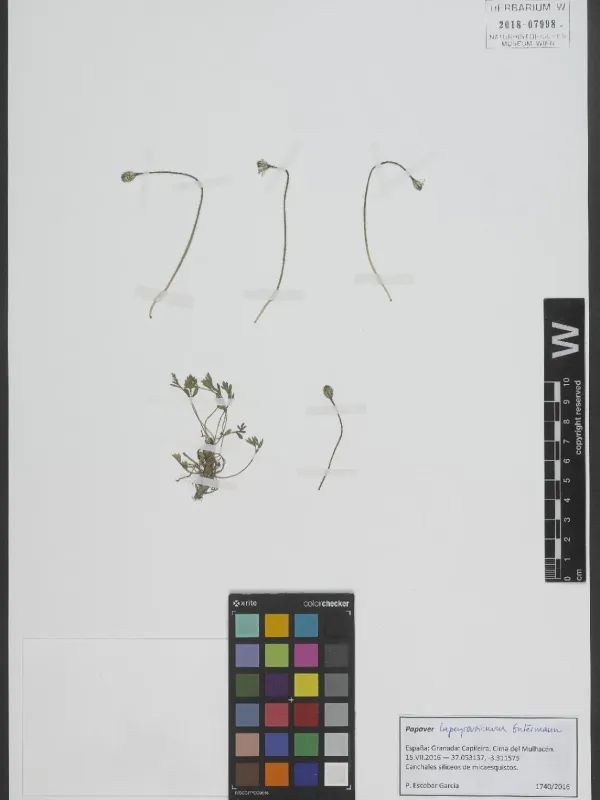
Description
Sowing dates
The Lapeyrouse poppy (Papaver lapeyrousianum) belongs to the Papaveraceae family and is a perennial herbaceous plant adapted to harsh mountain conditions. Seeds of this species are highly viable, although they require a long period of dormancy and specific temperatures for germination.
The optimal sowing time is early spring, immediately after the snow melts, when the soil is moisture-rich. Alternatively, sowing in late autumn before the ground freezes promotes natural stratification, which is essential for uniform emergence.
Seeds should be sown superficially, as they require light to germinate, or covered very lightly with fine sand. It is crucial to avoid crowding, ensuring a spacing of at least 20–30 centimeters between mature plants to allow for healthy development.
For quicker establishment in cultivation, container propagation is sometimes used, but it must be handled carefully. The species possesses a taproot and is extremely sensitive to root disturbance during transplanting.
Under favorable spring conditions, seedlings emerge within 14–21 days. Maintaining consistent moisture levels in the substrate is vital during this period, and the use of root-stimulating agents can help support young plant health.
Growing requirements
This species has strict requirements for soil drainage. Papaver lapeyrousianum cannot tolerate waterlogged conditions; therefore, ideal substrates include stony, sandy, or gritty soils with a neutral to slightly alkaline pH.
As a typical alpine plant, it demands full sun exposure. In shaded locations, the flowering stems tend to stretch, losing their structural integrity, and the overall volume of floral production significantly declines.
The poppy is relatively resilient to harsh climate conditions, tolerating extreme daily temperature fluctuations and strong winds. It thrives in regions with cool summers, avoiding sites prone to extreme soil heat.
Irrigation should be moderate and carefully controlled. Excessive watering often triggers root rot, which is the most frequent cause of plant mortality during the summer growth phase.
Fertilizer application should be minimal, focusing on mineral complexes low in nitrogen. Excessive organic matter can encourage foliage overgrowth at the expense of flower bud formation.
Main diseases and pests
The primary threats to the Lapeyrouse poppy are fungal diseases exacerbated by high humidity. Powdery mildew can affect leaves during foggy periods or in areas with poor air circulation.
Root rots, such as Fusarium, pose a serious risk when plants are sited in heavy, poorly draining soils. Infection spreads quickly through the root crown, leading to the rapid decline and death of the entire rosette.
Among pests, aphids and soil-borne nematodes cause the most damage. Aphids cluster on the flowering stalks, sucking sap and deforming buds, which severely compromises the plant's aesthetic value.
Systemic insecticides are recommended for pest control at the beginning of the growing season. However, due to the sensitive nature of alpine species, biological control methods are often preferred to minimize chemical stress.
Disease prevention is best achieved through strict moisture management and regular weed control. Weeds create microclimates that encourage the proliferation of pathogenic fungi and harbor various pests.