
Macleaya kewensis
Macleaya kewensis
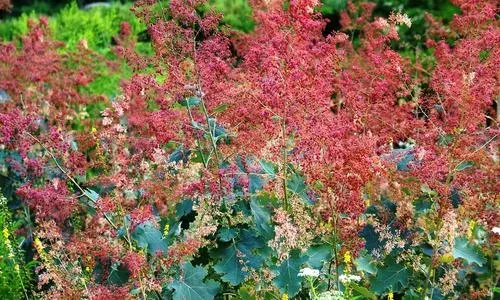
Description
Sowing dates
Macleaya kewensis is a perennial herbaceous plant belonging to the Poppy family (Papaveraceae). In agricultural practice, it is primarily propagated vegetatively by dividing rhizomes, which allows for faster establishment and more consistent growth compared to seed sowing.
Seed propagation is less common and requires stratification at temperatures around +4 degrees Celsius for several weeks. Seeds are typically sown in greenhouse trays during early spring to ensure uniform germination and successful seedling development.
Planting of rhizomes or established seedlings is usually performed in early spring once the soil temperature has risen sufficiently. Proper spacing is essential, as the plant develops a robust root system and a significant amount of vegetative mass.
The recommended planting density for commercial fields is approximately 60x60 or 70x70 centimeters. This arrangement provides adequate ventilation and space for the plants to grow without competition for nutrients or light.
Successful establishment depends on moisture availability immediately after planting. Regular watering is critical during the first few weeks to ensure the roots become well-established in their new environment before the onset of hotter temperatures.
Growing requirements
Macleaya kewensis requires open, sunny locations for optimal growth and high concentration of alkaloids. Shaded conditions lead to weak stems and a significant reduction in the quality and quantity of the harvestable raw material.
The soil should be fertile, well-drained, and have a neutral or slightly alkaline pH. Heavy clay soils that retain too much moisture are unsuitable, as they significantly increase the risk of root rot during the dormant winter period.
The plant is moderately drought-tolerant once established but performs best when supplied with consistent moisture during the growing season. Adequate irrigation during dry spells is recommended to prevent premature leaf wilting and growth stagnation.
Winter hardiness is a key characteristic of this species, allowing it to survive temperate climates. However, in colder regions, applying a layer of organic mulch around the base of the plants can protect the rhizomes from extreme temperature fluctuations.
Fertilization with nitrogen-based products during the vegetative phase promotes rapid leaf and stem development. Toward the end of the season, switching to potassium and phosphorus fertilizers strengthens the roots and prepares the plant for winter dormancy.
Yield
Macleaya kewensis is cultivated primarily as a source of isoquinoline alkaloids, such as sanguinarine and chelerythrine. These compounds are highly valued in the pharmaceutical industry for their antimicrobial and anti-inflammatory properties.
Yield capacity typically peaks between the third and fourth year of cultivation as the root system matures and spreads. Commercial plantations often rotate crops after a certain period to maintain high levels of productivity and prevent soil exhaustion.
Average yield for dry herb material generally ranges from 1.5 to 2.5 tonnes per hectare. Factors affecting yield include soil quality, irrigation management, and the timing of harvest, which directly impacts the concentration of alkaloids.
The harvest must be timed correctly, targeting the beginning of the flowering stage. Harvesting too early or too late can lead to a significant decrease in the chemical efficacy of the collected biomass, reducing its value.
Post-harvest processing requires rapid drying at temperatures below 50 degrees Celsius. This ensures the preservation of the bioactive alkaloids and prevents degradation that would otherwise occur if the material were left to dry too slowly.
Main diseases and pests
Macleaya kewensis is generally robust and resistant to most common pests. The most significant threat to a plantation is waterlogging, which often leads to root fungal infections that can damage the plant's vascular system.
Poor ventilation within dense plantations may encourage the development of powdery mildew. Maintaining proper spacing and ensuring the plantation site is open to natural breezes are the best preventive measures against such fungal diseases.
Pests like aphids may occasionally infest young foliage, extracting sap and reducing the plant's vigor. Biological control methods or mild soaps are preferred to manage these populations without contaminating the medicinal crop with chemical residues.
Weed control is critical only during the establishment phase of the plantation. Once the Macleaya plants reach maturity, their broad leaves provide sufficient shade to naturally suppress the germination and growth of competing weeds.
Strict regulation regarding chemical residues in medicinal plants necessitates careful management. The use of broad-spectrum herbicides should be avoided, as the integrity and safety of the final product are of paramount importance for the industry.
Harvesting
The harvest involves mowing the aerial parts of the plants at a height of 10-15 centimeters. Modern agricultural machinery is typically used to ensure an efficient and clean harvest over large areas, minimizing mechanical damage to the biomass.
Phenological timing is the most important factor in deciding when to harvest. The onset of the flowering stage provides the best balance between biomass quantity and the concentration of the desired medicinal chemical compounds.
Depending on local climate conditions, a second harvest might be possible late in the season. However, this depends on the plant's ability to recover and store enough energy in the rhizomes to survive the subsequent winter period.
The collected raw material should be transported immediately to the drying facility. Prolonged storage in heaps, especially under warm conditions, can trigger fermentation and heating, which leads to the breakdown of active chemical compounds.
Logistics should involve the use of breathable, ventilated containers for transport. This practice prevents crushing the leaves, which are the most valuable part of the plant, and keeps the raw material in optimal condition until it reaches the processing unit.