
Yellow hornpoppy
Glaucium flavum Crantz
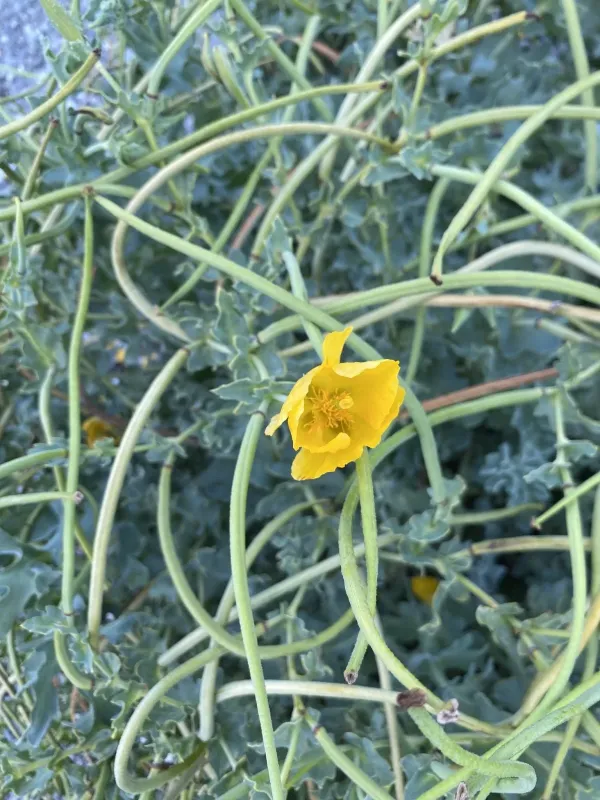
Description
Sowing dates
The yellow hornpoppy is a biennial plant, which implies that the most effective sowing period is autumn, allowing seeds to naturally stratify throughout winter.
Spring sowing is also an option, but it requires thorough seed preparation and warm, well-prepared seedbeds to ensure uniform germination in the fields.
Seeds are extremely small, necessitating shallow planting at a depth of no more than 1–2 centimeters to allow for adequate sunlight for emergence.
Standard row spacing is maintained at 45–60 centimeters, providing enough space for mechanized cultivation and weed control operations throughout the season.
Once seedlings emerge, thinning is required to ensure a spacing of 20–25 centimeters between individual plants to optimize vegetative growth.
Growing requirements
As a member of the Papaveraceae family, the yellow hornpoppy is well-adapted to drought-prone environments and thrives in sandy, well-draining soils.
The crop requires full sun exposure and performs poorly in shaded areas, as light intensity directly influences the accumulation of medicinal alkaloids.
Neutral or slightly alkaline soil types are ideal, while heavy clay soils prone to waterlogging must be avoided to prevent root system diseases.
Temperature management is generally straightforward as the plant is hardy, yet it benefits from stable environmental conditions during the early growth stages.
Soil aeration is critical for development, making regular inter-row cultivation necessary to maintain the soil structure and prevent crust formation.
Yield
The commercial value of the yellow hornpoppy lies in its aerial parts, which serve as the primary source for the extraction of the alkaloid glaucine.
Yield potential ranges from 1.5 to 2 tons of dry herb per hectare, depending heavily on the soil fertility and the timely application of maintenance practices.
Harvesting is strictly timed to coincide with the peak flowering phase, as this is when the concentration of secondary metabolites is highest in the tissue.
Efficiency in harvesting is crucial, as the chemical composition of the plant material can degrade if it remains in the field for too long after being cut.
Proper post-harvest processing ensures the quality of the raw material remains suitable for industrial pharmaceutical manufacturing standards.
Main diseases and pests
The plant possesses inherent chemical defenses, which provide a level of natural resistance against many common agricultural pests and insects.
However, excessive soil moisture remains the primary threat, as it creates an environment conducive to root rot and other fungal complications.
Crop rotation protocols are strictly followed to prevent the buildup of soil-borne pathogens that might target the root system of the biennial plants.
Occasional infestations of aphids may occur during the early spring, requiring prompt monitoring and the use of targeted biological control agents.
Maintaining clean fields free of debris is the best preventative strategy against long-term disease pressure in large-scale commercial plantations.
Harvesting
The harvest phase is initiated when the majority of plants reach full bloom, ensuring that the pharmaceutical potency of the collected herb is at its maximum.
Cutting is performed by machines set at a precise height of 5–10 centimeters above the soil to avoid root damage and minimize soil contamination.
Immediate transportation to processing facilities is necessary to prevent excessive fermentation and moisture accumulation in the gathered green mass.
Drying must be conducted in controlled environments, ensuring temperatures remain moderate to protect the molecular stability of the extracted compounds.
- Field mowing
- Loading and transport
- Material cleaning
- Thermal drying
- Final batch packaging