
Glaucium grandiflorum
Glaucium grandiflorum
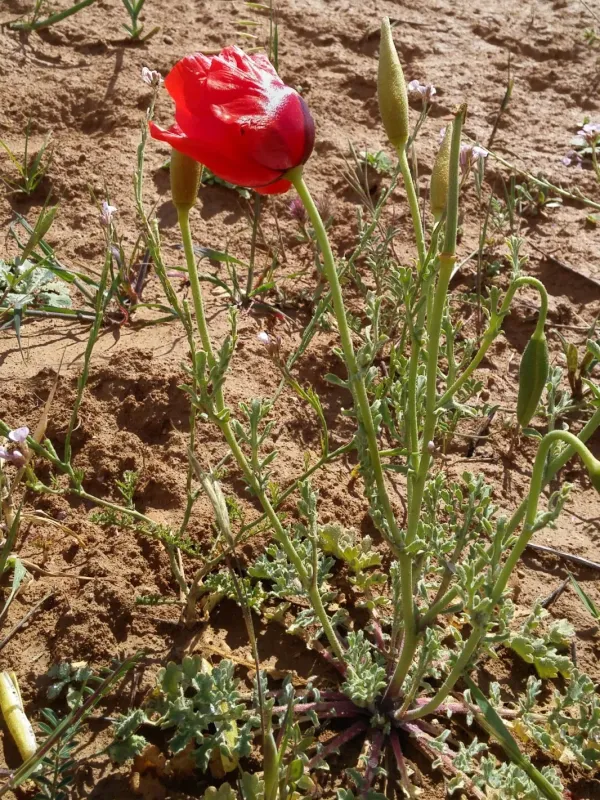
Description
Sowing dates
Sowing Glaucium grandiflorum is best performed in late autumn or early spring, ensuring that the soil is sufficiently warmed and prepared.
The seeds are very small and should be sown shallowly, ideally at a depth of no more than 1 centimeter to ensure consistent emergence.
Row cropping with spacing between 45 and 60 centimeters is recommended to facilitate mechanical weeding and ensure optimal plant density.
Proper soil compaction after sowing is essential to maintain capillary moisture near the seeds, which is vital for the germination of this species.
In spring sowing, pre-stratification of seeds can significantly improve the uniformity of seedlings, leading to a more stable crop stand.
Growing requirements
Glaucium grandiflorum is a member of the Papaveraceae family and is highly photophilous, requiring full sun exposure to thrive and develop its alkaloids.
The crop prefers well-drained, sandy or light loamy soils, as it is highly sensitive to waterlogging which can quickly lead to root decay.
The plant demonstrates excellent adaptation to arid environments, making it suitable for regions with moderate to high temperatures and low rainfall.
Soil pH should ideally be neutral or slightly alkaline, promoting vigorous growth of the basal leaf rosette and the subsequent flowering stems.
Regular maintenance, particularly the control of competing weeds, is crucial during the early stages of the vegetative period for successful development.
Yield
The yield of medicinal raw material, primarily the aerial parts, is highly dependent on nitrogen and phosphorus availability during the rosette phase.
Economical production of Glaucium grandiflorum relies on maintaining a high density of plants per hectare without causing overcrowding of the canopy.
Harvesting at the peak of the flowering stage ensures the maximum concentration of active alkaloids, which determines the final market value of the crop.
Under optimal agronomic management, the plant provides a sustainable yield, making it an attractive crop for pharmaceutical ingredient manufacturers.
Consistency in crop yield is achieved through a combination of proper fertilization, moisture regulation, and protection against competitive weed flora.
Main diseases and pests
Fungal diseases, such as powdery mildew, represent a significant threat to the crop, especially in areas with high humidity and poor air circulation.
Root rot caused by stagnant water is a critical risk factor, necessitating the selection of well-draining fields and proper land leveling before planting.
Pests such as aphids can cause direct damage to the succulent leaves and stems, and may also transmit various viral diseases throughout the field.
Integrated pest management (IPM) strategies, including crop rotation and field sanitation, are essential to minimize the need for chemical interventions.
- Regular field scouting for early symptoms
- Maintaining adequate space between plants
- Strict control of weeds and host plants
Harvesting
Harvesting the aerial biomass is conducted during the mass flowering period, as this timing provides the highest content of target pharmaceutical compounds.
Mechanical harvesting involves cutting the stems at a specific height to ensure the plant can recover and continue its growth cycle if required.
Immediate transportation to the drying facility is mandatory to prevent biomass fermentation and the degradation of sensitive alkaloids.
Controlled drying at temperatures not exceeding 45 degrees Celsius preserves the quality and bioactivity of the herbal product effectively.
Final storage must occur in cool, dry, and well-ventilated conditions to maintain the integrity of the dried leaves and stems over long periods.