
Evening Primrose
Oenothera lamarckiana
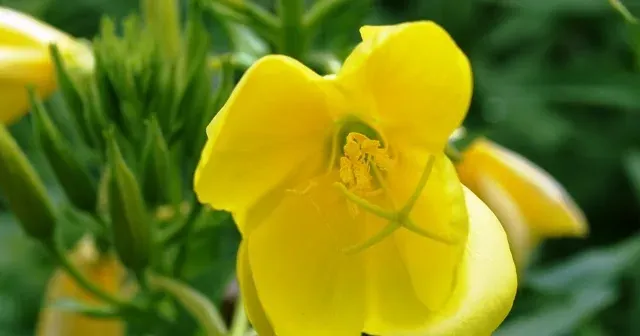
Description
Sowing dates
Sowing Oenothera lamarckiana seeds is preferably done in early spring as soon as the soil warms up to 8–10 degrees Celsius. Fall sowing in late October is also viable, allowing seeds to undergo natural stratification in the ground during winter.
The seeds are exceptionally small, so they should be mixed with dry sand to ensure even distribution during sowing. The planting depth should not exceed 0.5–1 centimeter, as deep burial inhibits germination significantly.
Row spacing is typically set at 45–60 centimeters to facilitate mechanical weed control and maintain healthy airflow between plants. Within rows, spacing should be approximately 30–40 centimeters to accommodate the plant's development during its second year.
After seeding, the soil surface should be lightly pressed to ensure good seed-to-soil contact. Regular light watering is crucial during the germination phase, especially if spring weather is dry and the topsoil loses moisture rapidly.
As a biennial species in many climates, the plant initially forms a rosette of leaves. Agronomists must ensure that the plot is properly prepared and kept free of aggressive weeds, which could easily shade out the slow-growing seedlings in the first year.
Growing requirements
Evening Primrose thrives in full sun exposure. While it is adaptable to partial shade, productivity, and the number of flowers (and subsequently seeds) are significantly higher when the plants are exposed to direct sunlight for the majority of the day.
The crop prefers light, well-drained soils, such as sandy loams or silt loams. It does not tolerate waterlogging, which often leads to root rot and poor development. Ensuring excellent drainage is a key prerequisite for successful cultivation.
The soil pH should ideally range from neutral to slightly acidic. Incorporating well-rotted organic matter before sowing improves soil structure and nutrient content, supporting the rapid growth required for a strong harvest.
Known for its taproot system, the plant displays excellent drought tolerance once established. However, providing supplemental irrigation during the critical flowering and seed-filling stages is recommended to maximize oil yield and seed quality.
In terms of temperature, Oenothera lamarckiana is quite hardy. It can withstand various environmental stresses, but it performs best in temperate conditions where moisture is available during the spring growing season to fuel vegetative expansion.
Yield
The primary economic output is the seed, which is processed to extract oil rich in gamma-linolenic acid. Yields depend heavily on crop management, with intensive systems typically producing between 500 and 1000 kilograms of seed per hectare.
Pollination is a major factor in yield success. Evening Primrose is largely cross-pollinated by insects, particularly nocturnal pollinators. Maintaining healthy populations of pollinators near the field is essential for high seed set.
Beyond seed production, the plant serves as a late-summer and autumn honey plant. Beekeepers value this species for providing a forage source during periods when many other nectar-producing crops have finished blooming.
Quality control in seed harvesting is paramount. Seeds should be harvested when the pods turn brown but before they split and drop their contents. Uniformity in ripening is difficult to achieve, often requiring careful timing or the use of chemical desiccation.
Processing the oil requires careful temperature control during extraction to preserve the integrity of the essential fatty acids. Proper storage of seeds in cool, dry conditions is also critical for maintaining the high-value constituents of the oil.
Main diseases and pests
Disease pressure is generally low if proper drainage is managed. However, in humid or overcrowded conditions, powdery mildew can become a significant issue, appearing as a white fungal coating on the leaves and reducing photosynthetic activity.
Root rot is the most serious threat associated with poorly drained soils. Prevention is strictly through choosing appropriate sites and avoiding excessive irrigation, especially during wet spells where water can stagnate around the base of the plant.
Aphids are the most common insect pests, feeding on young shoots and buds. In large-scale operations, monitoring is essential, and if thresholds are exceeded, targeted applications of insecticidal soaps or systemic pesticides may be necessary.
Leaf-eating larvae, such as those from various moth species, can occasionally cause damage to the foliage. Integrated Pest Management (IPM) practices, including the use of biological controls, are highly recommended to keep these populations in check.
Crop rotation remains the best preventative measure against soil-borne pathogens. A gap of at least 3–4 years between planting Evening Primrose on the same plot significantly reduces the buildup of harmful fungi and pests.
Harvesting
Harvesting is labor-intensive because pods mature unevenly across the plant. Selective harvesting, where only mature pods are picked, is often the most effective way to prevent seed loss due to shattering.
For commercial-scale production, chemical desiccation is often utilized to induce uniform ripening. This allows for a single-pass mechanical harvest, significantly reducing labor costs at the expense of needing to manage the chemical application precisely.
Post-harvest handling is critical. Seeds must be cleaned and dried immediately after collection. Any moisture remaining in the seed mass will lead to rapid spoilage and a drastic reduction in the quality of the essential fatty acids.
Final cleaning is done using aspiration and screening equipment to remove fine dust and debris. The clean seed should then be stored in breathable, moisture-proof containers in a temperature-controlled environment to extend its shelf life.
Storage should be in a cool, dry place away from direct sunlight. High-quality seeds stored under these conditions can maintain high germination rates and oil viability for several years, making them suitable for long-term supply chains.