
Evening primrose
Oenothera villosa
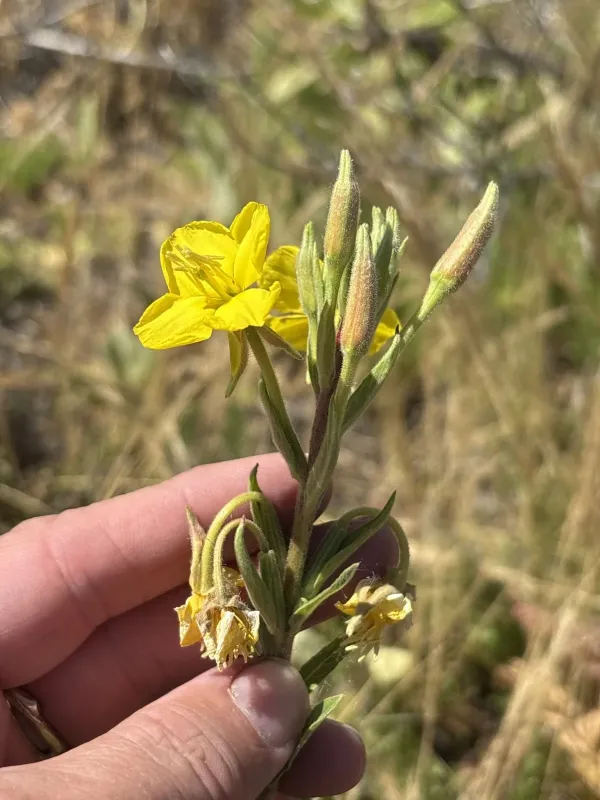
Description
Sowing dates
Oenothera villosa, commonly known as evening primrose, belongs to the Onagraceae family and is recognized as an important source of essential fatty acids.
The optimal time for sowing is early spring once the soil temperature consistently reaches 10 degrees Celsius, allowing for steady germination.
Farmers often use precision seed drills to ensure uniform spacing, keeping sowing depth shallow, approximately 1 to 2 centimeters, as seeds are quite small.
Winter sowing is another viable approach in regions with mild winters, as seeds benefit from cold stratification to break dormancy and ensure uniform spring emergence.
Proper plant density is crucial to avoid overcrowding, typically aiming for rows spaced 30–45 centimeters apart to facilitate field management.
Growing requirements
This crop thrives in sunny, open locations as it requires high light intensity to maximize the production of seeds and essential oils.
Well-drained sandy or loamy soils are ideal, as the plant does not tolerate waterlogging, which can cause root rot and hinder overall development.
Although it is moderately drought-tolerant, consistent soil moisture during the flowering and seed-setting stages is vital for achieving high yields.
Soil fertility management should focus on phosphorus and potassium application to support flower development and enhance the oil content of the seeds.
Effective weed control is essential in the early stages of growth because the seedlings establish themselves slowly and struggle against aggressive weeds.
Yield
The primary agricultural goal for Oenothera villosa is the harvesting of seeds, which are processed to extract evening primrose oil, rich in gamma-linolenic acid.
Average yield rates typically range from 500 to 800 kilograms per hectare depending on regional climatic conditions and soil nutrition strategies.
Given the pharmaceutical demand for the oil, the crop is highly valued, providing significant economic returns for growers focusing on high-quality harvesting.
Yield stability relies on favorable weather during the ripening phase, as excessive rain can lead to poor seed quality and reduced oil percentages.
Efficient processing facilities are necessary to maximize the oil extraction yield from the harvested seeds, ensuring that all valuable components are recovered.
Main diseases and pests
The crop is susceptible to several fungal diseases, particularly powdery mildew, which thrives in humid conditions and can affect leaf health.
Insect pests such as aphids and various weevils can cause damage to buds and developing fruits, potentially leading to lower overall biomass and seed loss.
Integrated pest management, including regular crop rotation with non-host plants, is the most effective way to prevent soil-borne pathogens and insect outbreaks.
Maintaining good airflow within the field by managing plant density helps reduce the risk of disease spread during periods of high precipitation.
Early detection through regular field scouting is crucial, allowing for targeted intervention before pest populations can cause significant economic damage.
Harvesting
Harvesting evening primrose requires precision because the seeds are prone to shattering if left on the stalk beyond the ideal maturation point.
A two-stage harvesting process is recommended: cutting the plants and leaving them in windrows to dry, followed by threshing once the moisture content drops.
Direct combining is possible only when the plants are uniformly mature, but it carries a higher risk of harvest loss due to the fragile nature of the seed pods.
Post-harvest handling must be swift, including thorough cleaning and drying, to prevent the growth of mold and the degradation of the oil’s fatty acid profile.
Storage should be in cool, dry, and ventilated conditions to maintain the viability and chemical composition of the seeds for future processing.