
Tetraedron
Tetraedron
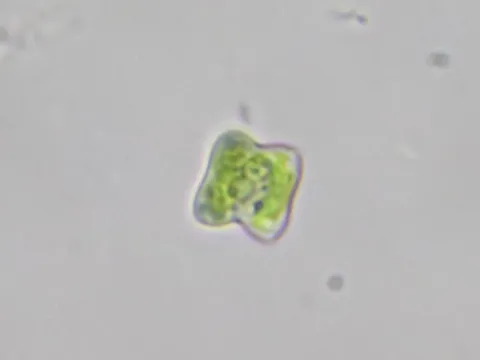
Tetraedron is a genus of green microalgae belonging to the Chlorophyceae class, characterized by its distinctive tetrahedral or pyramidal cell shape.
What the section contains

Tetraedron
Cultivation involves preparing liquid nutrient-rich media, where the inoculation of the initial stock initiates the rapid colonization of the aquatic environment.
These algae reproduce asexually, primarily through the release of autospores from the mother cell, which then develop into mature individuals under optimal lighting.
Unlike traditional crops, growth dynamics are measured by cell density per milliliter, which is monitored daily using spectroscopic analysis or microscopy.
Scalable production is typically conducted in photobioreactors, which provide controlled conditions to maximize the rate of division and biomass accumulation.
The success of cultivation depends heavily on temperature regulation, as stable conditions between 20°C and 30°C are crucial for enzymatic activity.
Light availability is the primary energy factor; therefore, transparent materials and artificial illumination are used to prevent light limitation during high-density growth.
Water quality must be managed carefully, ensuring that nitrogen, phosphorus, and trace minerals are present in bioavailable forms for the algae to absorb.
Adequate CO2 supply is essential, as carbon sequestration drives the synthesis of carbohydrates and lipids within the cellular structure.
Stirring or bubbling is required to maintain cells in suspension, ensuring uniform access to light and nutrients throughout the entire volume of the tank.
Grazing by zooplankton is a significant risk, as species like rotifers can decimate a thriving Tetraedron culture in a matter of hours.
Pathogenic fungi are another major threat, as they can infect the cell walls, causing structural failure and the release of cellular contents.
Invasive strains of faster-growing algae can outcompete Tetraedron for limited resources, necessitating rigorous sterilization of the medium before inoculation.
Accumulation of metabolic waste products can lower the culture pH, eventually reaching levels that inhibit growth and lead to population collapse.
Abiotic stress factors, such as extreme salinity shifts or heavy metal contamination, can impair the photosynthetic efficiency of the population.
Harvesting is typically performed once the culture reaches the stationary growth phase to ensure maximum yield of lipids and pigments.
Centrifugation remains the gold standard for biomass recovery, offering high purity and efficiency in separating cells from the spent growth medium.
Flocculation methods, where natural or synthetic polymers are added, can be used to aggregate cells into larger clusters, making filtration significantly easier.
Once collected, the biomass is typically processed into a paste or dried into a fine powder to preserve its nutritional profile for downstream applications.
Post-harvest stabilization is essential to prevent degradation; therefore, quick freezing or spray-drying is employed to maintain product stability.