
Tetraedron minimum
Tetraedron minimum
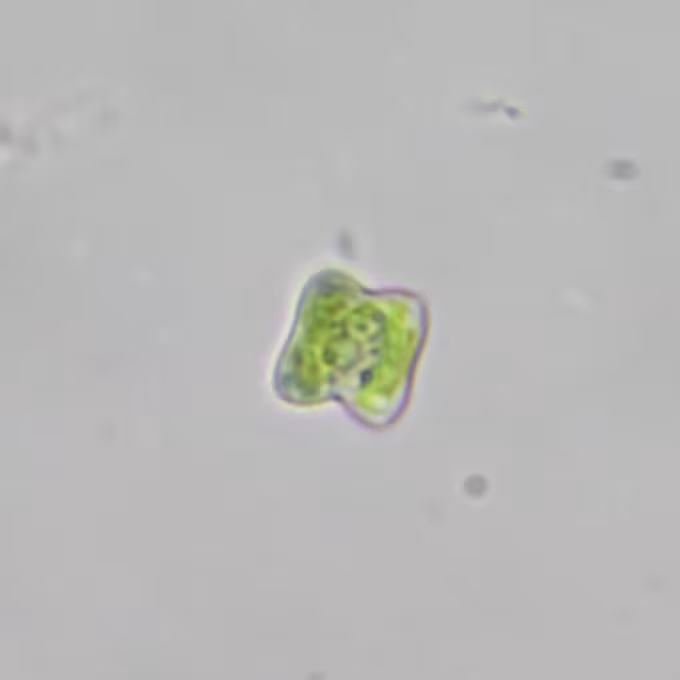
Description
Growing requirements
Tetraedron minimum is a microscopic green alga belonging to the family Hydrodictyaceae. It is a cosmopolitan species, frequently found in freshwater habitats such as ponds, lakes, and reservoirs worldwide.
This organism is characterized by its distinctively small, tetrahedral-shaped cells. It functions as a primary producer, utilizing photosynthesis to build biomass and playing a crucial role in aquatic food webs.
It thrives in nutrient-rich (eutrophic) environments where concentrations of nitrogen and phosphorus are elevated. High solar irradiance significantly accelerates its reproduction rates, leading to dense population blooms.
The morphology of the cell, with its smooth surface and angular geometry, allows for buoyancy and efficient distribution within the upper layers of the water column where light is abundant.
Temperature serves as a key physiological driver; growth is optimized during summer months when water temperatures range between 18 and 25 degrees Celsius, matching the seasonal patterns of other planktonic species.
Main diseases and pests
High population densities of Tetraedron minimum in aquaculture settings can induce oxygen depletion during night hours, posing a direct threat to fish stock and overall pond stability.
The excessive growth of these algae is often an indicator of water body nutrient overloading. This condition can lead to imbalances in the aquatic ecosystem and negatively affect water transparency.
Management strategies involve the limitation of nutrient runoff from surrounding agricultural lands, which helps maintain water quality and prevents the mass development of nuisance phytoplankton.
Biological control, including the support of grazing zooplankton populations like Daphnia, is considered an effective, environmentally friendly method for managing its density in fish ponds.
In cases of severe blooms, selective algicides might be employed, though such actions require careful monitoring to ensure that the ecological equilibrium and fish health remain protected.