
Pillwort
Pilularia minuta
Description
Growing requirements
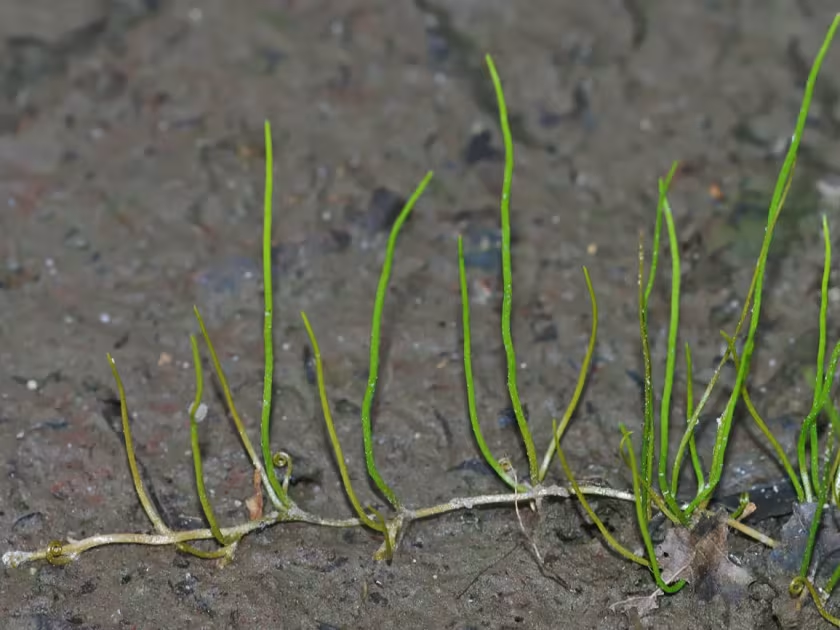
Pilularia minuta, commonly known as a type of pillwort, is a fascinating member of the Marsileaceae family. Unlike typical ferns, this species is aquatic or semi-aquatic and features thread-like leaves that form dense, low-growing mats in its preferred environment.
The plant is native to Mediterranean regions, typically found in areas that experience seasonal flooding and subsequent drying. This evolutionary adaptation allows the plant to survive in ephemeral wetlands where water levels fluctuate significantly throughout the year.
Cultivation requires specialized care, specifically focusing on soil moisture and ambient humidity. It thrives in nutrient-rich, saturated substrates and requires moderate, indirect light to maintain its vibrant green color and healthy growth cycle.
In terms of usage, the plant is primarily appreciated in botanical research and as a niche ornamental for paludariums or specialized water gardens. It serves as an excellent ground cover for damp environments, contributing to soil stabilization in protected wetland settings.
The reproduction cycle is quite complex, involving the production of sporocarps that emerge from the rhizomes. These hardy structures protect the spores during dry spells, ensuring the survival of the population until the next wet season facilitates germination.
Main diseases and pests
The primary threats to Pilularia minuta include habitat fragmentation and the loss of seasonal ponds due to agricultural expansion. From a management perspective, the plant is susceptible to invasive aquatic vegetation that outcompetes it for light and nutrient resources.