
Pillwort
Pilularia globulifera
Description
Growing requirements
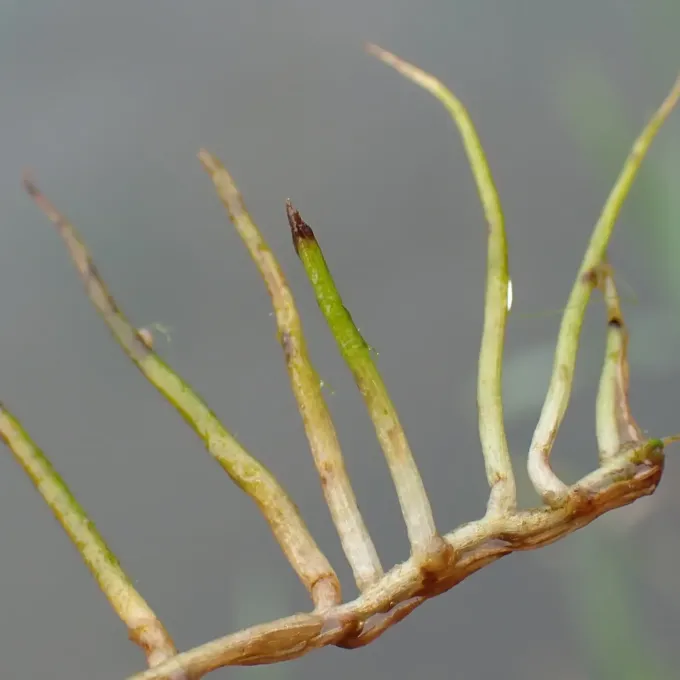
Pillwort (Pilularia globulifera) is a member of the Marsileaceae family. It is a distinctive aquatic fern that lacks the traditional frond structure, appearing instead like a narrow, grass-like aquatic plant.
The native range of this species covers much of Europe, where it colonizes shallow, seasonal pool edges and the margins of nutrient-poor, clean water bodies.
To cultivate this species effectively, one must provide a substrate of sandy or muddy soil. It thrives in shallow water depths, typically ranging from a few centimeters up to 30 centimeters deep.
The plant requires high levels of ambient light to maintain its growth density. Shaded conditions will lead to elongated, sparse stems and a significant decline in overall plant health.
Water chemistry is a critical factor, as Pillwort is intolerant to high levels of nitrates and pollutants. It prefers oligotrophic or mesotrophic conditions typical of pristine natural wetlands.
Main diseases and pests
The most significant threat to Pillwort populations is the destruction of their natural habitat caused by the draining of wetlands and intensive land development.
Eutrophication of water bodies, often caused by agricultural runoff, is a primary cause for the disappearance of established stands of this fern.
Competition from aggressive aquatic weeds and invasive species frequently overwhelms Pillwort, depriving it of the necessary space and light for survival.
Fungal infections can develop in stagnant water, particularly affecting the sporocarps located at the base of the stems, which hinders the plant's reproduction.
Inappropriate temperature fluctuations during the growing season can lead to stress, making the plant more susceptible to opportunistic pathogens and water-borne pests.